
Ordel
The political and agricultural heart of the capital region.
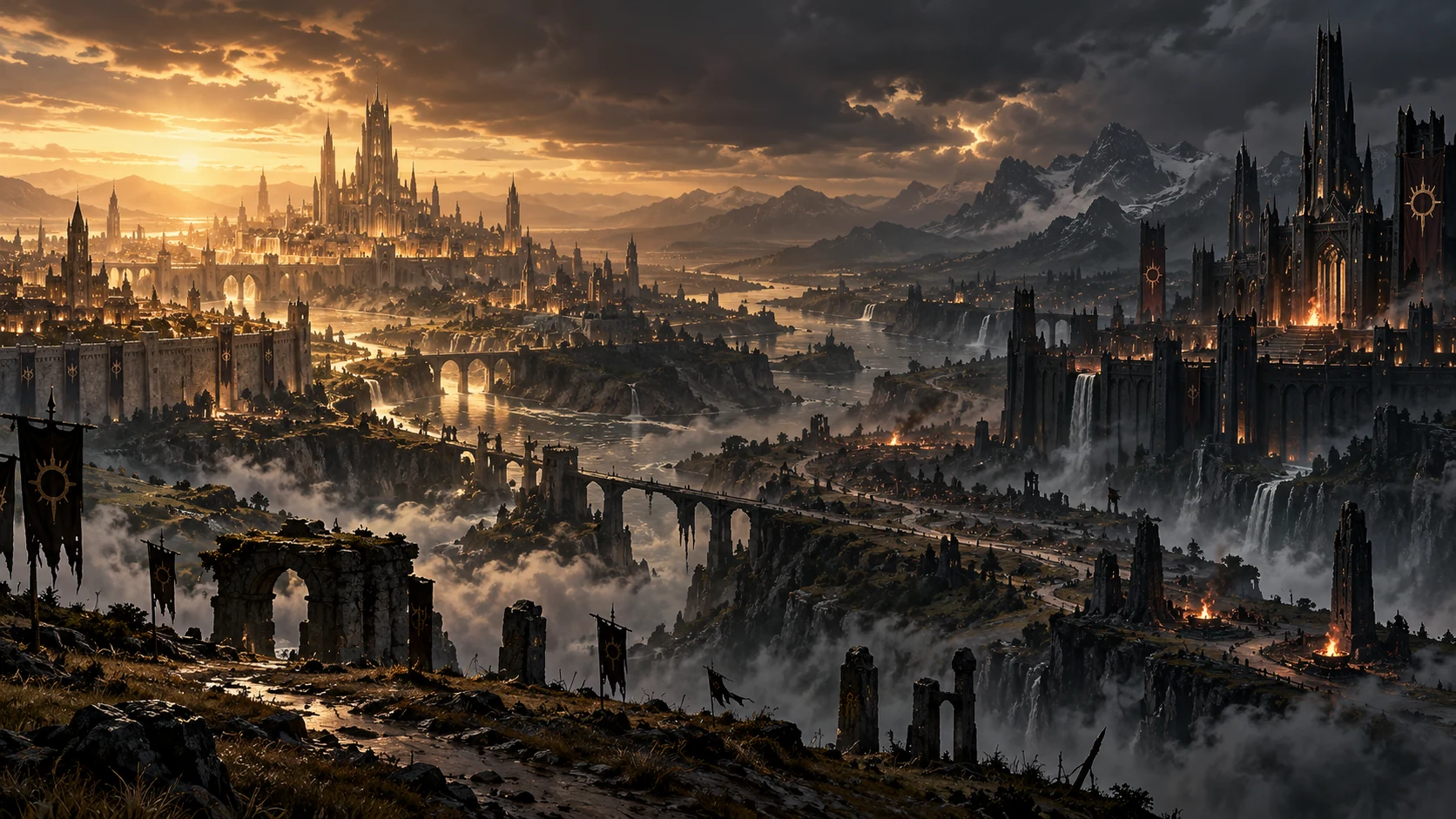
Two lands, one erased inheritance, and a border that still remembers the wound.
The world of The Black Concord is not divided by simple geography. Edrane and Sareth Mor once belonged to the same historical body, and every road, archive and ruined crossing still carries the argument between conquest and memory. This page offers a spoiler-light guide to the two powers that shape the duology.
The shared fracture
Before Edrane and Sareth Mor were opposing states, they were part of one larger realm. The destruction of Sareth and the suppression of its memory did more than redraw a border: it created two political imaginations that cannot forgive each other. The west learned to call stability peace. The east learned to treat remembrance as survival.
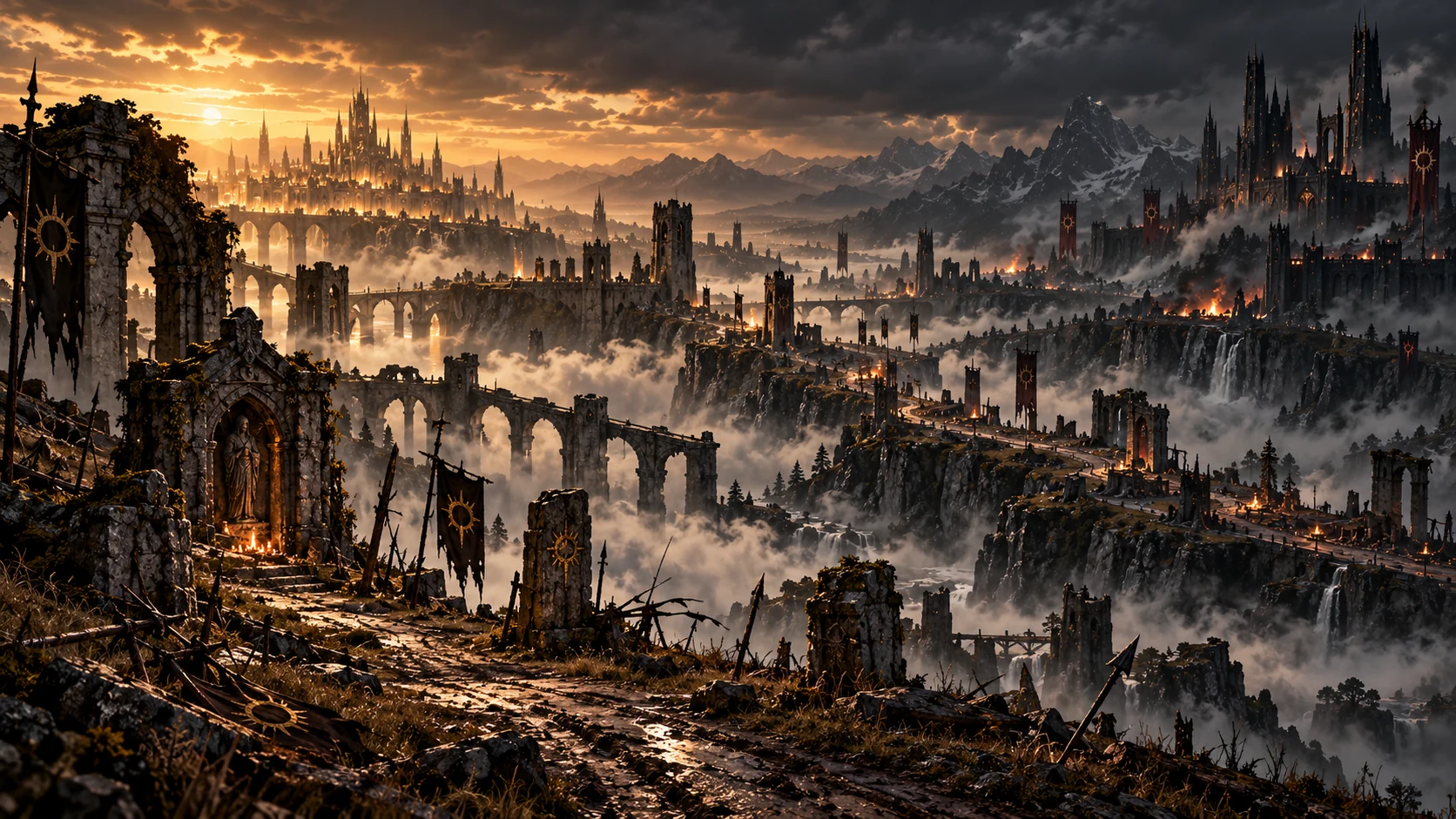
That fracture still shapes the land itself. Bridges connect places that no longer trust one another, ruined shrines survive along old trade roads, and fortified crossings remind both realms that history was never fully buried.
The map in The Black Concord is not neutral. Every province, pass and capital carries the pressure of what was taken and what endured.

The human realm
Edrane is the human kingdom ruled by Rovan Theryn. Its eight recognized provinces are bound together by agricultural supply, commerce, military command, clergy and civil administration. A king at war must keep those systems functioning as the eastern front gives way.
Its capital, Ordelain, is the political and agricultural heart of the royal centre. The dynasty projects continuity through its court and institutions. Yet the historical legitimacy it defends is compromised by an atrocity that official records attempted to erase.
The eastern dominion
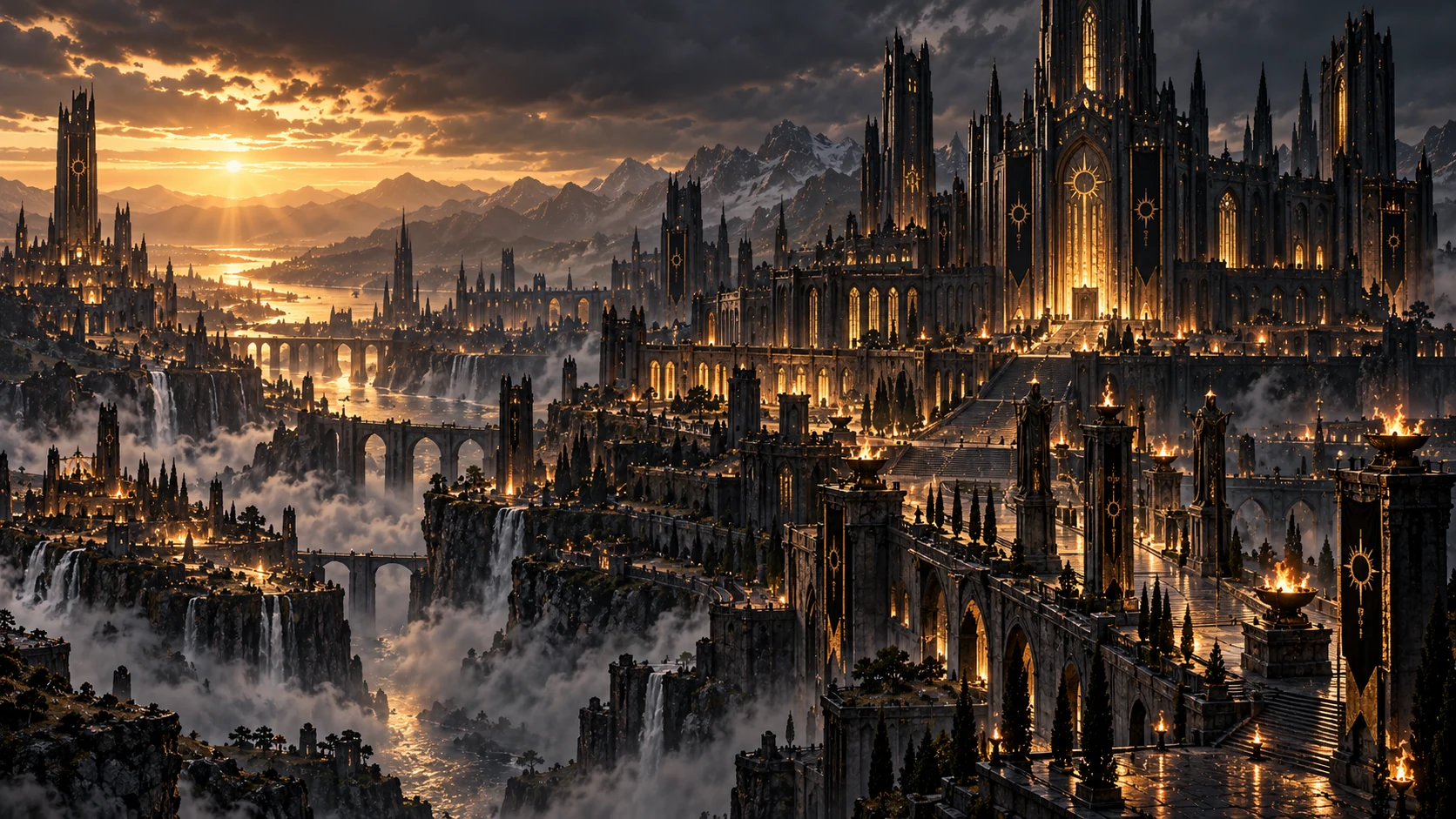
Sareth Mor is the Veyr state raised out of loss, continuity of memory and deliberate reconstruction. It does not present itself as a relic of the destroyed province; it presents itself as the answer to that destruction. Ritual, archives and government are tightly bound because memory is political power here.
Its capital, Vharin, stands rebuilt above older ruin. The city reads like a statement: monumental, disciplined, lit by memorial fire and ordered around places where names, records and lineage are preserved. If Edrane legitimizes itself through continuity, Sareth Mor legitimizes itself through survival and proof.
The eight provinces
The eight recognized provinces of Edrane are more than heraldic divisions. Their crops, mines, ports, clergy and hospitals determine how the kingdom can fight—and what it can survive.
The political and agricultural heart of the capital region.
Grain, livestock and the supplies that keep armies fed.
Mountains, mines, soldiers and Maera Holt’s homeland.
Marshlands, poverty and strong religious fervour.
Ports, trade, banking and Ilvar Renn’s networks.
Healers, rivers, salt and obstetric knowledge.
The eastern front, military defeat and contested logistics.
Wine, monasteries and ecclesiastical influence.
Sareth is the historical ninth province, erased from official history. It is not included among the eight recognized provinces.
Cities and lives
Ordelain and Vharin are seats of authority, but the conflict reaches far beyond their courts. The world of The Black Concord runs on grain, regulated blood supplies, roads, hospitals, archives and the people ordered to keep them functioning.
Ordelain is the political centre of Edrane and the seat of its ruling dynasty. Court ritual and the institutions of the Church of the First Dawn shape public legitimacy.
Vharin remains the capital of Sareth Mor. Its older crypts, damaged archives and halls of names keep the memory of the Night of Closed Gates materially present.
The Veyr depend on human blood to sustain their Echo. Record-keeping, medical care and allocation are therefore not background details but instruments of political power.
Continue deeper into the collection through the rulers, the Veyr and the books that carry the conflict forward.
Detailed profiles exploring history, everyday life and difficult political choices.