
Varess
The ruling house. Varess turns memory into policy and treats historical truth as the foundation of sovereignty. It is closest to the throne, but also most responsible for what the throne justifies.
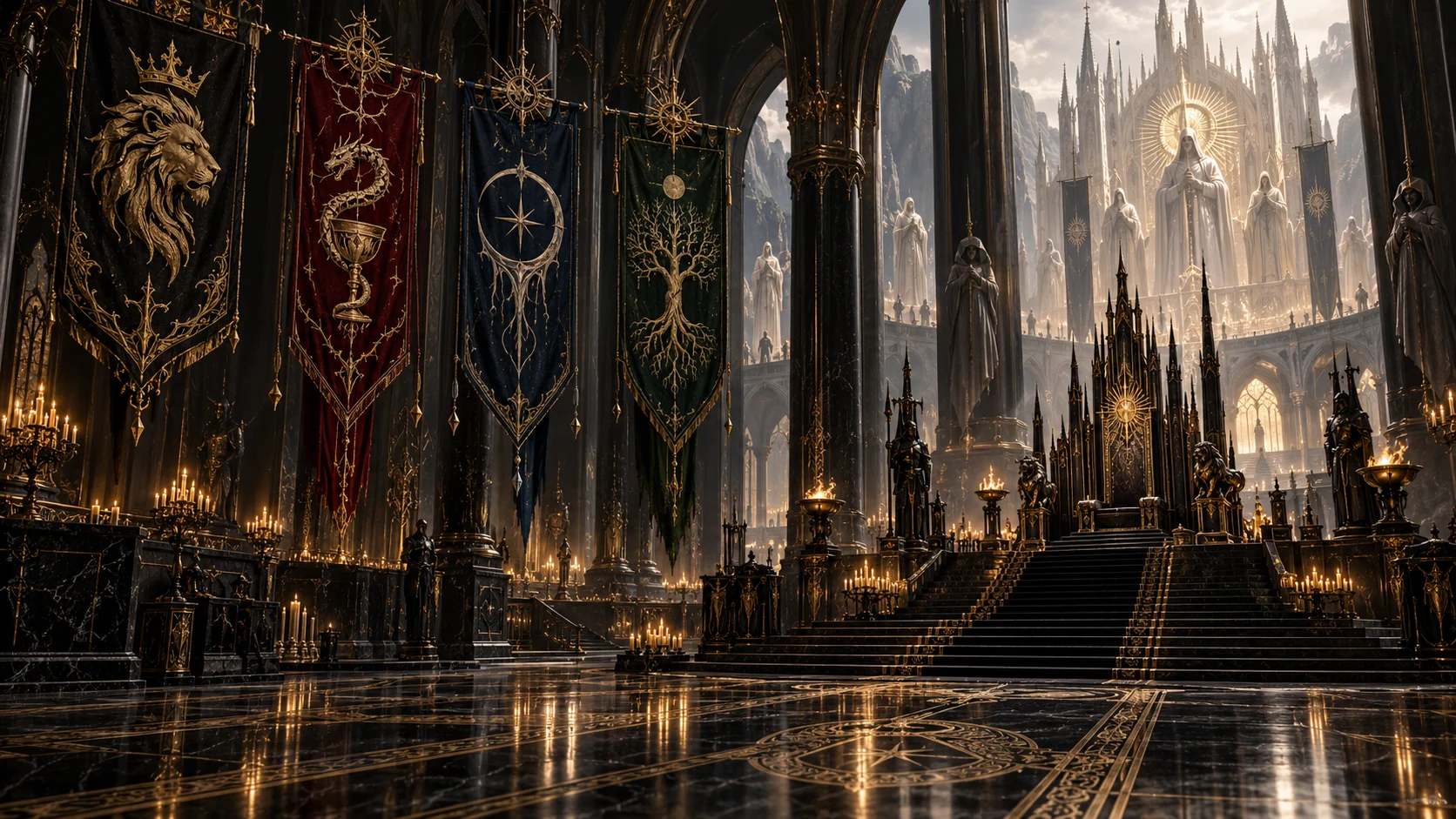
Memory, armies, blood, diplomacy — and a faith that refuses to surrender the meaning of history.
The Black Concord is not shaped by monarchs alone. Veyr society rests on four great houses whose responsibilities overlap, compete and occasionally collide. Across the border, the Church of the First Dawn supplies the human kingdom with ritual legitimacy, public language and a version of the past that conquest cannot erase cleanly.
These houses are not decorative bloodlines. They are living institutions. Each one protects a part of Veyr survival that cannot be treated as secondary: memory, force, blood administration, and diplomatic continuity. Their emblems endure because they mark functions the state cannot lose.
That division does not create harmony. Every campaign, succession question and crisis of supply tests the balance between them. The queen rules above the houses, but she never rules without them.
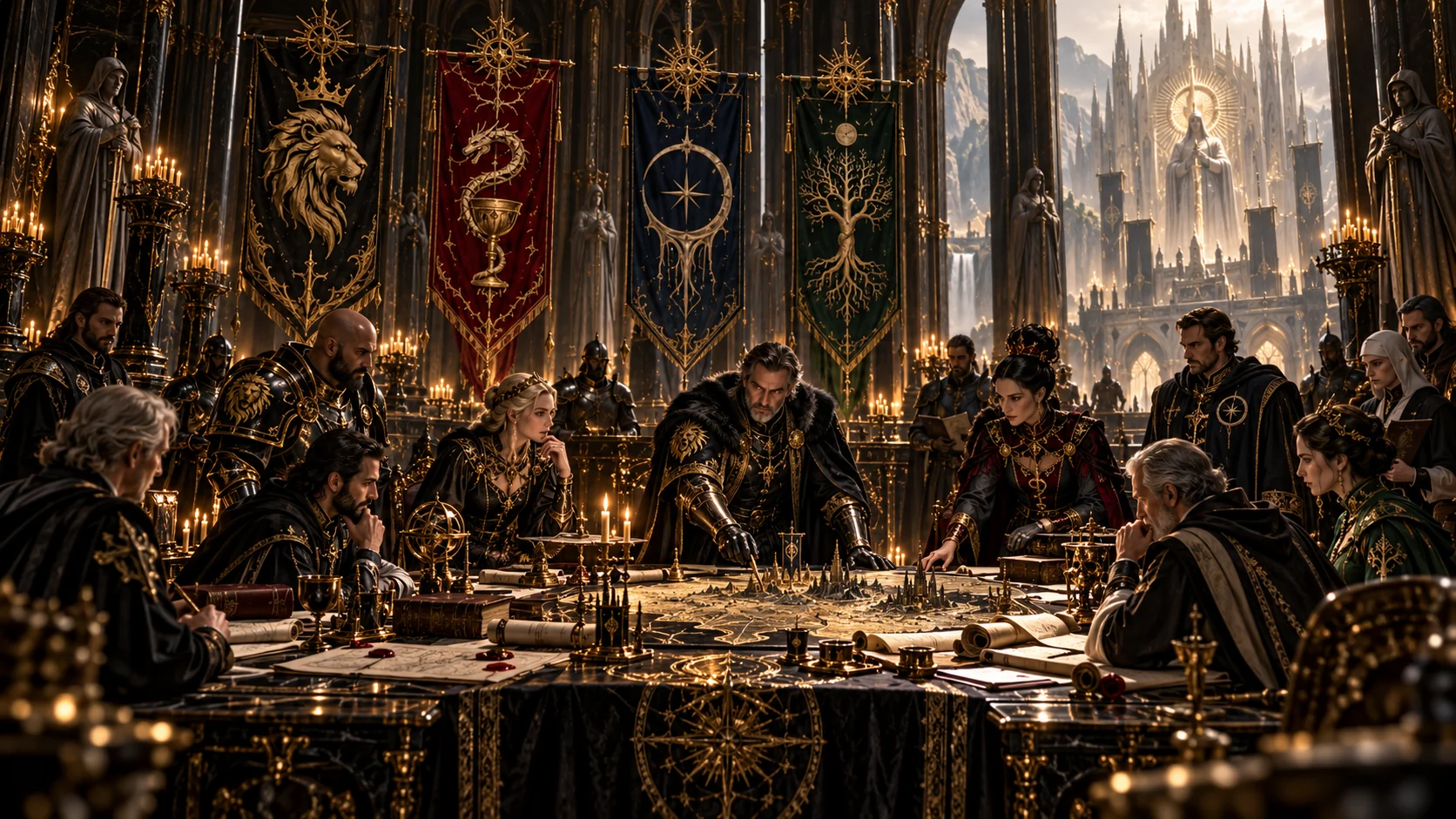
The ruling house. Varess turns memory into policy and treats historical truth as the foundation of sovereignty. It is closest to the throne, but also most responsible for what the throne justifies.
The military house. Velkar protects the queen, commands field force and embodies the argument that survival sometimes depends on disciplined violence rather than persuasion.
The house of blood, medicine and difficult accounting. Ilyen keeps the Red Tithe intelligible and reminds every idealist that a Veyr polity still runs on finite bodies, rations and records.
The house of diplomacy, correspondence and intelligence. Orvane moves through negotiation, soft leverage, information control and the fragile art of keeping rivals talking long enough to matter.
On the human side of the border, the Church offers more than private belief. It defines ceremony, moral language and the public interpretation of the past. That makes it politically indispensable even when kings ignore it, resist it or force it to bend.
In The Black Concord, the First Dawn is not a simple villain and not a purely spiritual refuge. It is an institution caught between sincerity, self-preservation and the terrifying demand to admit that the history it defended may be incomplete or compromised.
A conquered kingdom can lose armies and still speak through its rituals. Faith becomes another battlefield when history itself is under dispute.
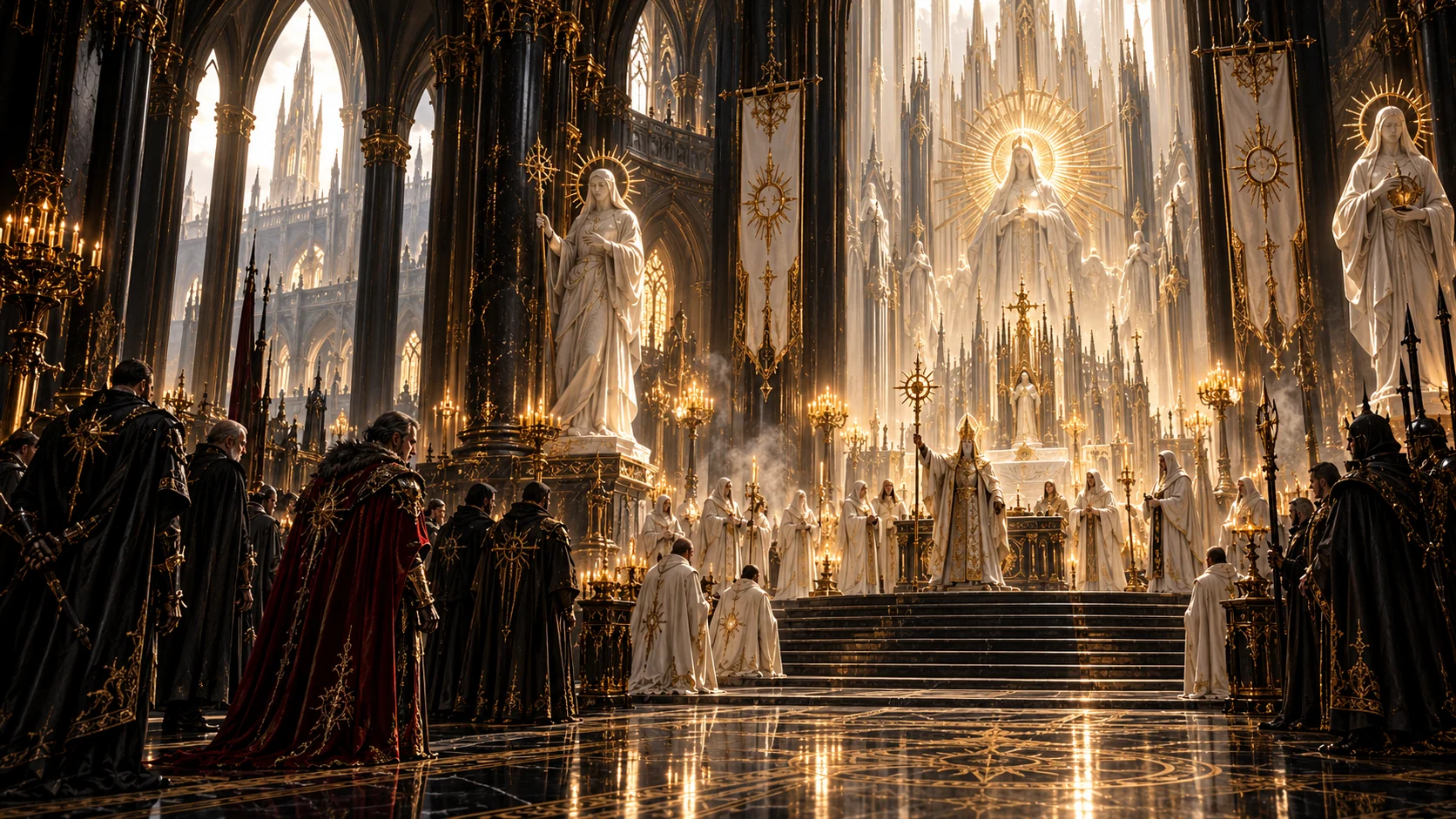
The series’ political tension comes from overlapping systems of power. Monarchs make decisions, but houses, officers, physicians, priests and administrators determine how those decisions survive contact with reality.
The Black Concord prefers pressure over simplification. No faction is pure; no institution is empty. Even when a house or church acts in good faith, that sincerity exists inside systems that still produce hierarchy, coercion and compromise.
From the four houses, continue into the lands they govern. Explore the capitals, provinces and borderlands of The Black Concord on the interactive map.