
Truth as a weapon
The revelation at the core of the series is not a twist meant to redeem the conqueror. It is a true atrocity weaponized into a foundation myth for a harsher political order.
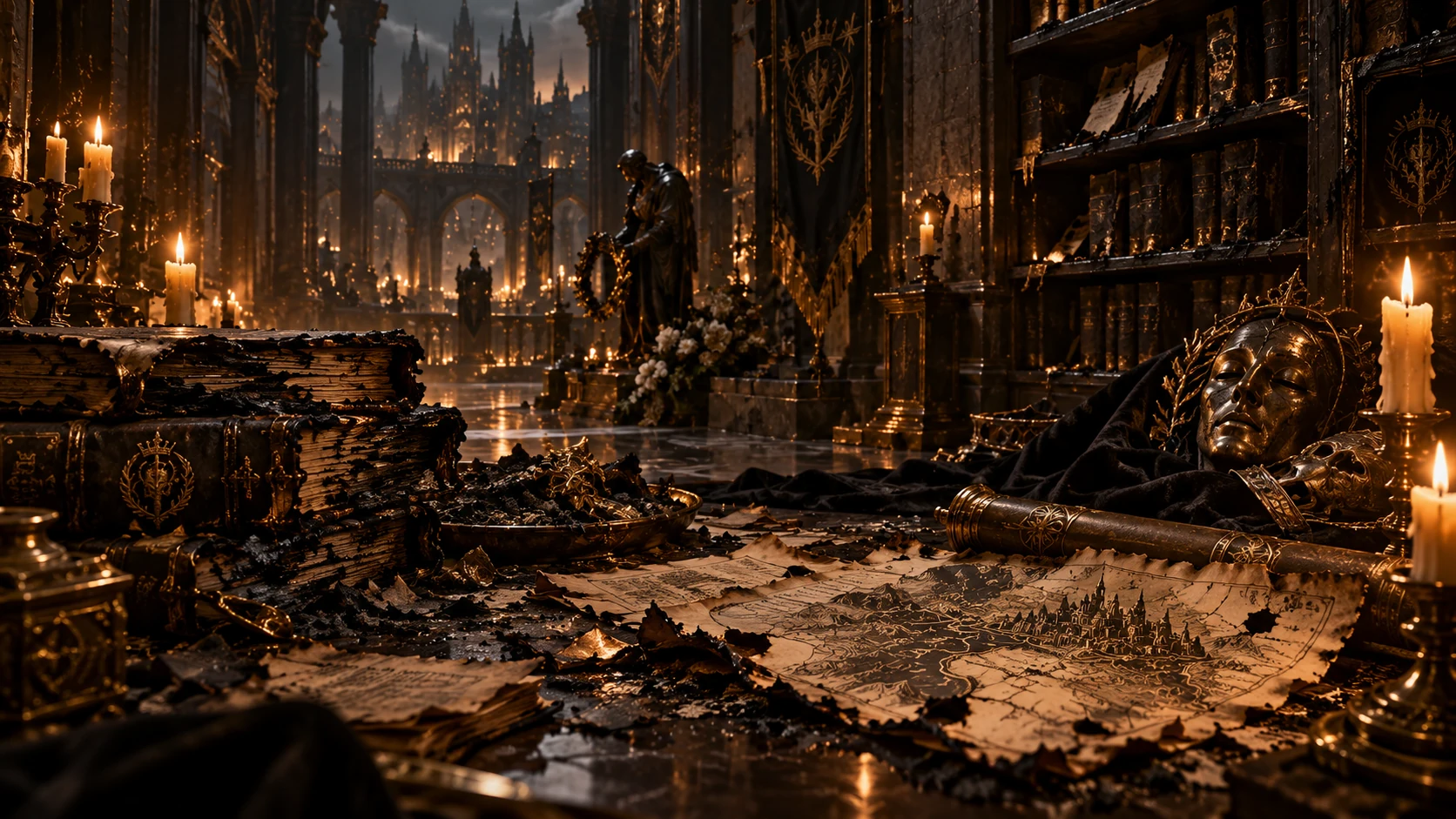
A conquest born from a massacre, a marriage born from defeat.
The Black Concord begins with a truth no kingdom can hide forever: the human dynasty of Edrane built its peace on the destruction of Sareth. When Nereth Varess returns at the head of the Veyr, she does not come to ask for justice. She comes to take history, territory and sovereignty back by force.
The buried truth
Centuries before the duology opens, Edrane and Sareth belonged to a single human realm. During a dynastic war, the western branch sealed Vharin, poisoned its wells, burned its sanctuaries and destroyed the archives that held true names, bloodlines and the memory of a people.
The official record renamed that campaign peace. The survivors remembered it as annihilation. That fracture is the real beginning of the story: not a border dispute, but a kingdom built on a crime that was absorbed into law, religion and inheritance.
“The old human dynasty built a kingdom on a lie. The Veyr queen builds an empire on truth used as a weapon.”
This page stays spoiler-light and focuses on the official premise of the duology.

The invasion
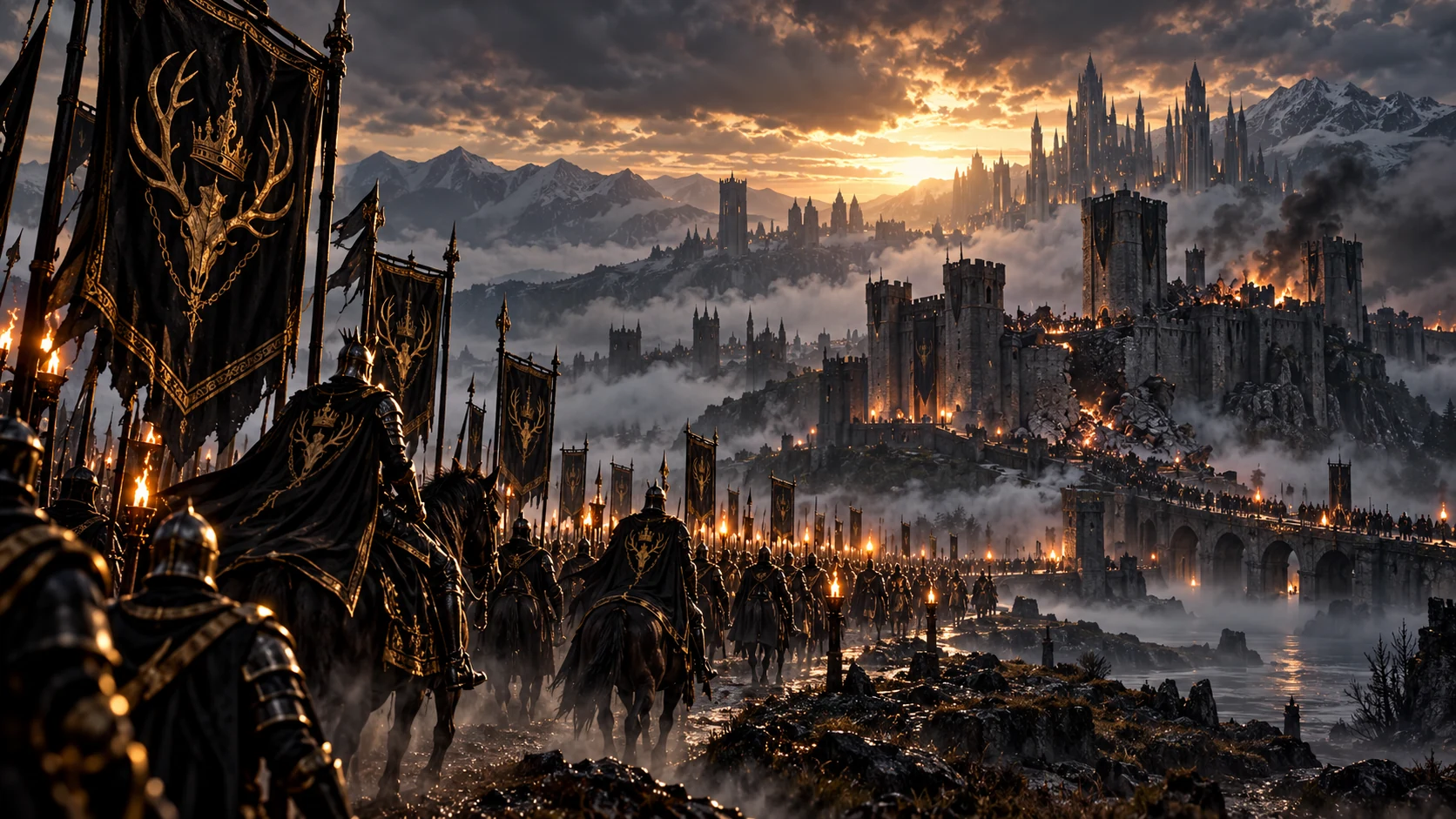
Nereth Varess is not a misunderstood savior. She is a conquering queen who believes the truth of her people’s suffering entitles her to rule the descendants of those who profited from it. Her army advances with logistics, ritual discipline and a political program that is as deliberate as it is ruthless.
Across the border, Rovan Theryn inherits a crown already compromised by history. He is not guilty of the founding crime, but he governs its outcome. As province after province falls, the story becomes less about whether he can win and more about what survival will cost his people if he cannot.
The central bargain
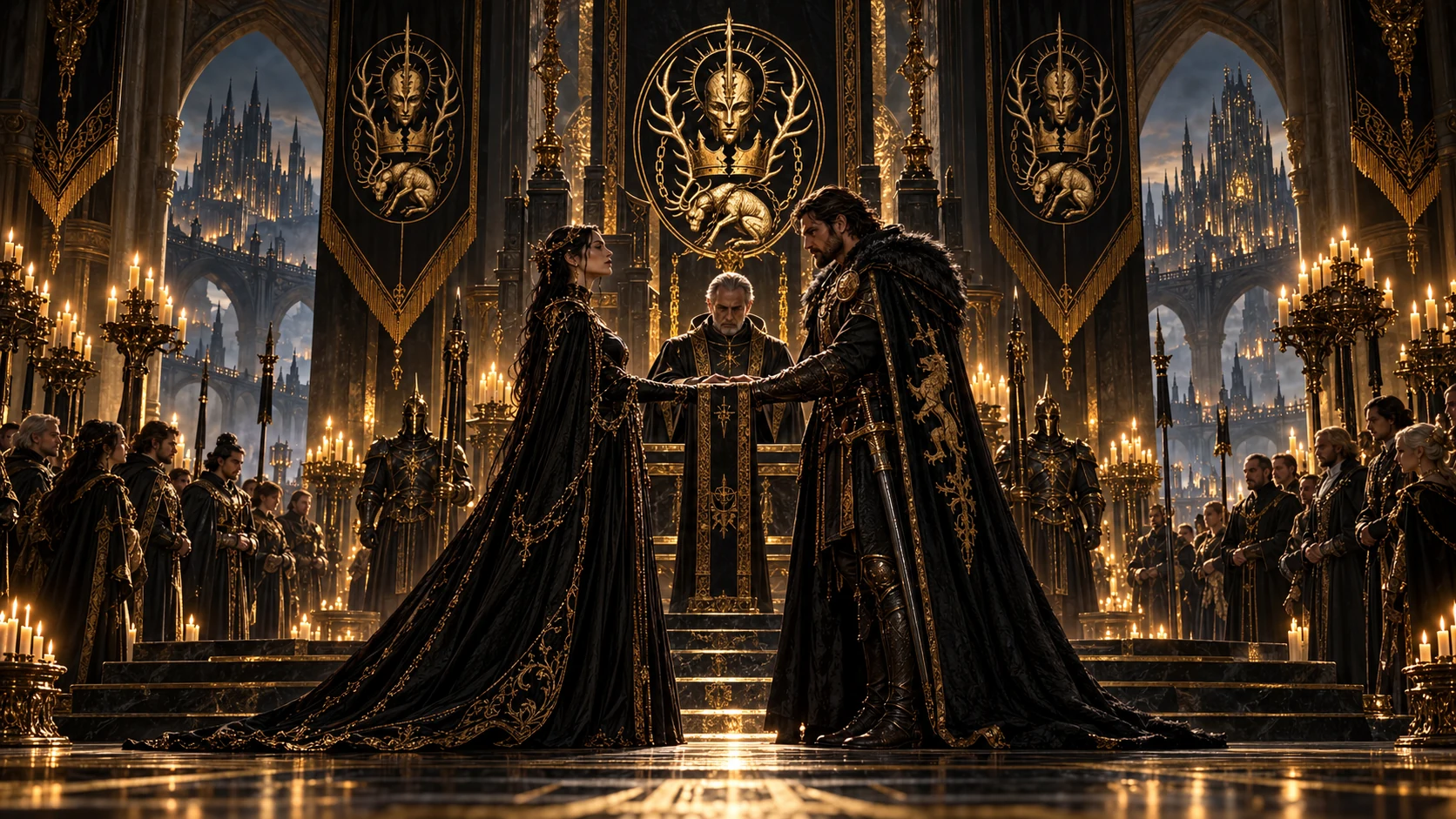
At the heart of the duology lies a political union between conqueror and conquered crown. The arrangement prevents wider slaughter, but it does not erase coercion, hunger, surveillance or the moral imbalance of the new regime. That tension is the soul of the series.
The romance in The Black Concord is real, adult and emotionally charged, yet it never asks readers to forget the structure that contains it. Desire, trust and tenderness grow inside a system neither equal nor innocent. That is exactly what makes the story dark.
What defines the duology
The Black Concord is built around consequences, not easy absolution. It asks what happens when historical truth is real, vengeance is justified in origin but monstrous in execution, and love grows inside a structure of domination instead of rescuing anyone from it.
The revelation at the core of the series is not a twist meant to redeem the conqueror. It is a true atrocity weaponized into a foundation myth for a harsher political order.
The Concord can restore roads, food and stability while still remaining coercive. Safety is present, but never morally clean. That contradiction drives the emotional pressure of the books.
Nereth and Rovan do not cancel each other’s power. Their connection matters precisely because it develops amid conquest, duty, grief and the impossible need to keep living.
If the premise of The Black Concord speaks to you, continue through the books, the rulers and the wider world of the duology.