
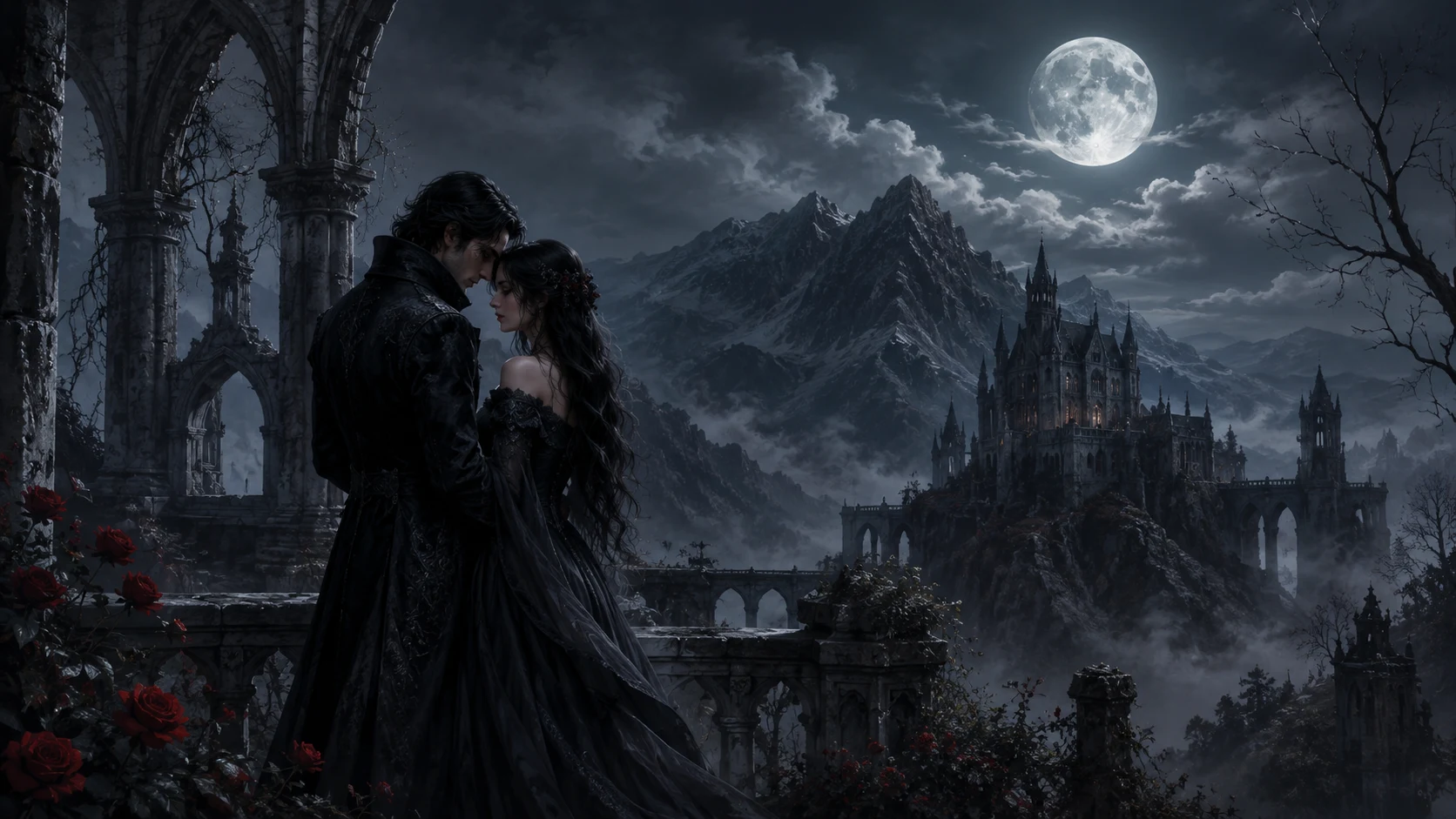
Gothic dark fantasy romance sits where three traditions overlap: the unease and beauty of gothic fiction, the supernatural or impossible stakes of dark fantasy, and a romantic relationship important enough to change the emotional shape of the story. The label is useful because none of those elements has to work alone. A haunted city can pressure the romance. A curse can make trust dangerous. A political or supernatural bond can turn intimacy into a question of power, survival, or memory.
The gothic part is more than old buildings
Gothic fiction is strongly associated with decaying estates, ruins, storms, hidden rooms, family secrets, and isolated places, but the deeper mechanism is atmosphere. The setting feels charged with history. The past is not finished; it keeps intruding on the present.
In fantasy, that pressure can become literal. A city may remember its dead. A relic may preserve a vow. A dynasty may be haunted by what it erased. The supernatural works best when it intensifies the emotional problem instead of simply decorating the scenery.
What makes the fantasy “dark”?
Dark fantasy usually places the fantastic beside fear, moral compromise, corruption, violence, grief, or forces that are difficult to control. It does not require hopelessness, and it does not automatically mean extreme content. The darkness can come from the world, from the cost of magic, from political structures, or from the choices characters are forced to make.
Where the romance fits
In gothic dark fantasy romance, the relationship is not pasted onto a fantasy plot. The world tests it. Secrets change what attraction means. Power imbalances have consequences. Trust may be complicated by masks, oaths, curses, rival loyalties, or histories that make a simple happy path impossible.
The most effective stories let romantic tension and gothic tension reinforce each other. The question is not only “Will these people choose each other?” It can also become “What would that choice cost?” or “Can they know each other truthfully inside a world built on concealment?”
Common elements readers may encounter
- A setting with a strong sense of age, decay, ritual, or buried history.
- Supernatural rules that affect memory, identity, vows, death, or inheritance.
- Romantic tension shaped by danger rather than separated from it.
- Secrets that alter how characters understand both the world and each other.
- A mood that values beauty and dread at the same time.
How it differs from nearby genres
Gothic romance
Gothic romance may use mystery, isolation, family secrets, and an ominous setting without requiring a fully fantastic world. Gothic dark fantasy romance makes the supernatural or secondary-world element structurally important.
Dark romance
Dark romance is a broad romance category often defined by transgressive, dangerous, or morally difficult relationship material. Gothic dark fantasy romance can contain darkness and difficult power dynamics, but the label does not by itself promise any particular level of explicitness or taboo content.
Romantasy
Romantasy is an umbrella term for stories where fantasy and romance are both central. Gothic dark fantasy romance is a more specific flavour: its identity comes from gothic atmosphere and darker fantastic pressures.
Where Wonders Workshop explores the territory
The Saintless Bride is presented by Wonders Workshop as a gothic dark fantasy romance set in ash-fallen Velmorne, a city where the dead remember vows. The Black Concord approaches adjacent territory from a more political direction, combining adult dark gothic fantasy, conquest, memory, and a dangerous royal bond.
Those books do not need to represent every possible version of the genre. They show why the label can be useful: it tells readers that atmosphere, fantasy, danger, and relationship stakes are designed to work together.