The question begins in Aetherholm
Invention and institutional secrecy turn a seemingly technical problem into a question of conscience. The first volume establishes the Heart, the Academy, and the stakes of treating a living mystery as property.

Heart of Steam · Reading guide
Three novels. Three cities. One complete story.
From the gears of Aetherholm to the masks of Velmira and the tides of Lunaris: follow the reading order, themes, and the purpose of every book, without major story spoilers.
Reading guide
The settings change, but the central moral question remains: when something living can respond, who has the right to claim it? Each novel tests that question through a different social system—engineering, ritual, and collective memory—while following Lyra, Dorian, Evelyn, Felix, and Aurum.
Invention and institutional secrecy turn a seemingly technical problem into a question of conscience. The first volume establishes the Heart, the Academy, and the stakes of treating a living mystery as property.
Where Aetherholm trusts instruments and records, Velmira shapes truth through ceremony, masks, and memory-lanterns. The second volume expands the conflict into institutions that decide whose story may be heard.
The final city is built around water, fractured moons, and memory. The conclusion confronts what it costs to preserve others without erasing their freedom.
The novels
These are spoiler-conscious introductions. They discuss the premise and atmosphere of each book, not the major revelations of the trilogy.
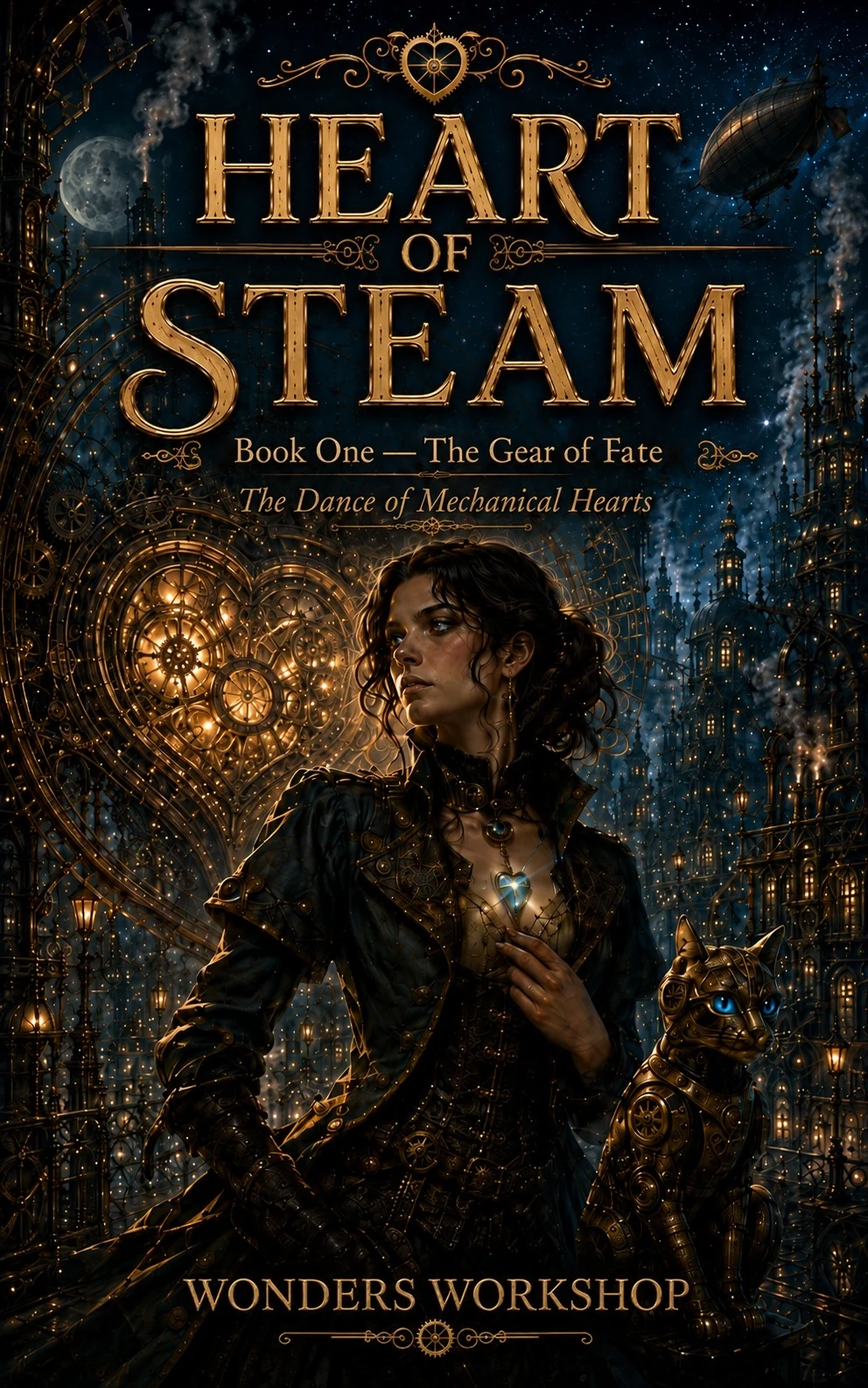
At the Academy of Aetherium, Lyra Ashcroft notices that a crystal at her throat responds to a forbidden corridor. A sealed library, a troubling diary, and a city powered by steam and precision place her curiosity in direct conflict with institutional authority. Her mentor Felix Marlowe knows the cost of chasing mechanisms that should remain closed.
The first novel draws its tension from investigation and invention: what evidence can be trusted, who keeps the archives, and how far the desire to understand can slip into the desire to possess. Aetherholm is not merely scenery; its laboratories, Houses, and sealed records create the conditions of the central dilemma.
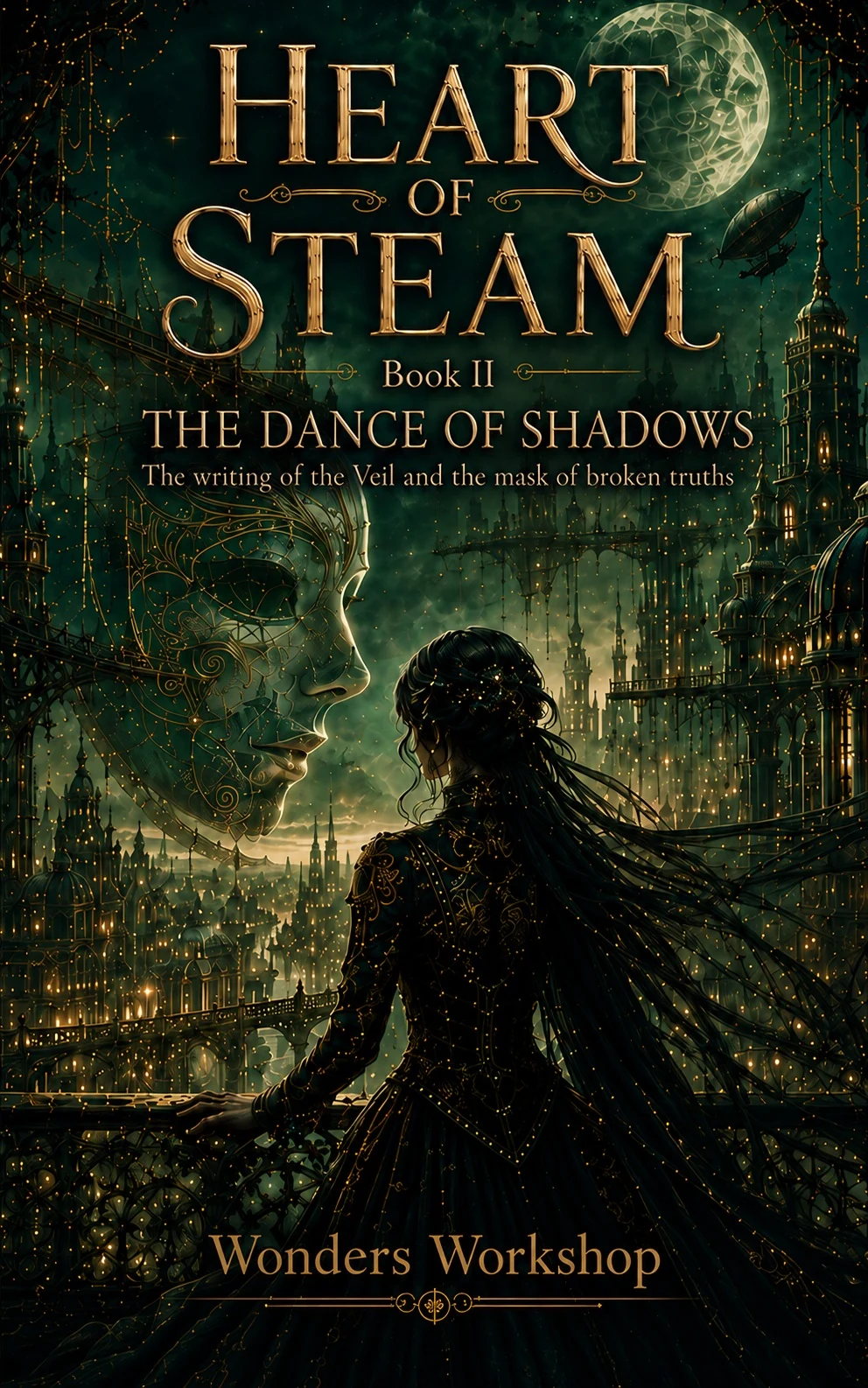
The journey moves to Velmira, a suspended city of glass bridges, memory-lanterns, ceremonial halls, and layered allegiances. Here a mask is more than a disguise: it can shape what is spoken, believed, and recorded. Lyra and her companions encounter a society that has made the management of testimony part of its public life.
The story shifts from the physical logic of mechanisms toward the social logic of ritual. Rather than repeating Aetherholm’s mystery, this novel explores how power selects versions of the past, and how loyalty is tested when a person’s identity can be interpreted by others. It is the middle movement of the same trilogy, not a standalone detour.
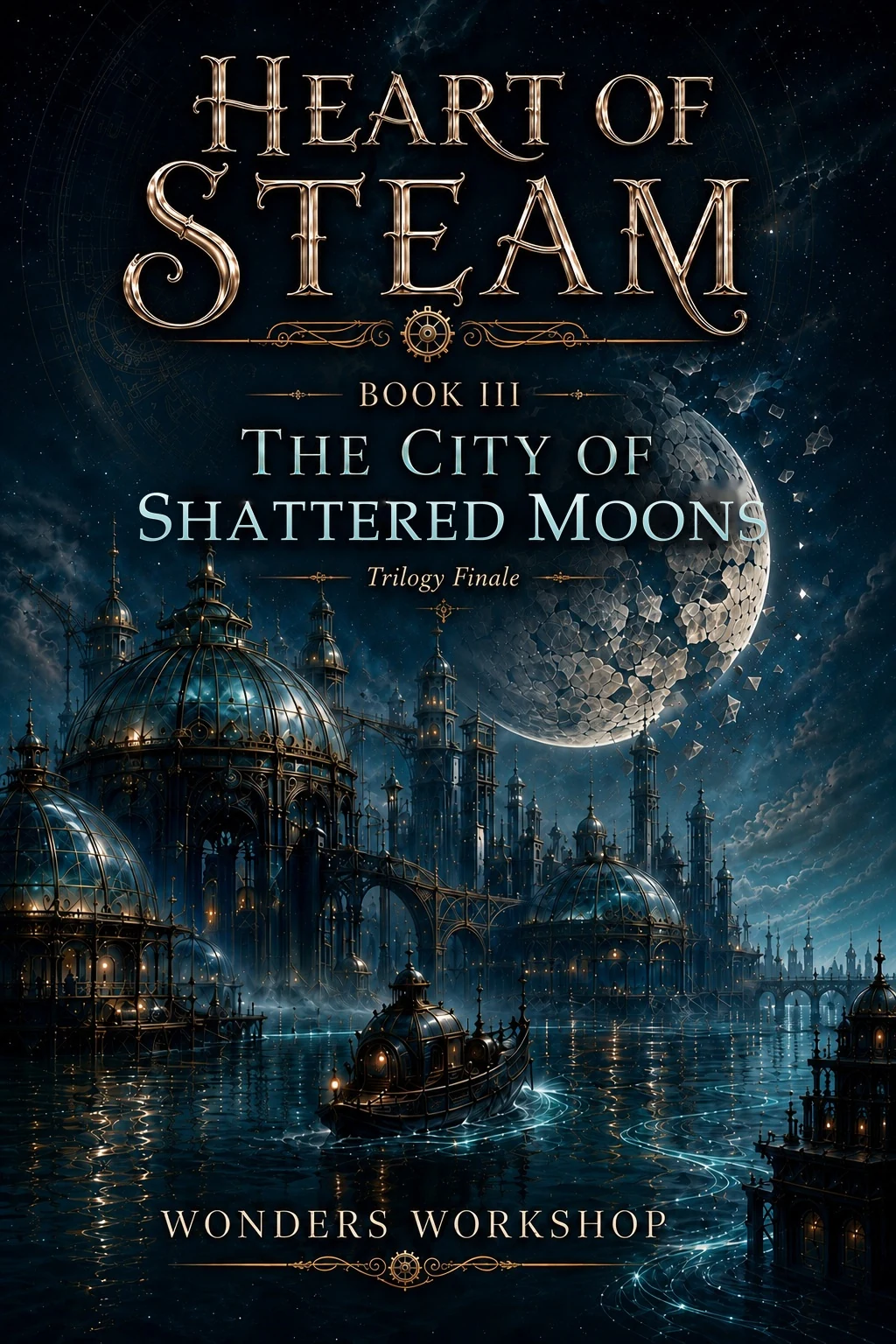
The trilogy reaches Lunaris, a maritime city of domes, shifting bridges, tidal records, and a fractured moon reflected in the water. The city lives with anomalies that are inseparable from memory, and the final volume brings the conflict surrounding the Heart into a setting where even boundaries can feel unstable.
This is the planned conclusion of the three-book arc. Its emotional and ethical focus is not simply whether an extraordinary power can be saved, but what it would mean to protect people and testimony without absorbing them into a single authority. The questions raised in the first two books converge here.
Spoiler-free comparison
This comparison helps you choose your next step without revealing plot solutions. The trilogy is meant to be read in order.
| Volume | Narrative lens | Setting emphasis | Central question |
|---|---|---|---|
| The Gear of Fate | The machine | Academy, workshops, Houses and archives | Can understanding become ownership? |
| The Dance of Shadows | The mask | Rituals, lanterns, bridges and testimony | Who gets to decide which truth is heard? |
| The City of Shattered Moons | The tide | Harbor, domes, moonlight and memory | Can we protect without erasing autonomy? |
Thematic guide
These are not just decorations around a romance. They affect the choices characters make and the kind of world they must inhabit.
Archives, lanterns, and tides hold different kinds of records. The trilogy asks why no single witness or institution should be able to close the meaning of an event for everyone else.
Aetherium and the mechanisms around it create real possibilities, but every system also reflects the intentions of its keepers. A working machine does not settle whether it should be used.
Lyra and Dorian’s relationship is part of a larger question about choice. Affection is meaningful only when the person receiving it remains free to answer.
Felix, Evelyn, Aurum, and others bring different forms of evidence and judgment. Shared responsibility is harder than assigning everything to one perfect custodian, but it is also more honest.
Reader questions
Yes. The three novels form a continuous character and world arc. Begin with The Gear of Fate, continue with The Dance of Shadows, and finish with The City of Shattered Moons.
Yes. The City of Shattered Moons is the trilogy finale. The story reaches a conclusion rather than requiring a fourth novel to resolve its central conflict.
The overviews above use opening premises, settings, and broad themes. They intentionally avoid major solutions, character fates, and the final outcome. The separate Heart Archive contains material with explicit spoiler notices.
Both are integral. The inventions, cities, records, and strange workings of Aetherium create the external conflict, while relationships and questions of trust give the story its emotional center.
Universe directory
All nine main sections are ready to explore: Home, Trilogy, Characters, World, Map, Houses & Powers, Aetherium, Timeline and Archives & Lore.
Heart of Steam
Start with the first book, explore the reader materials, or return to the full universe directory as more in-world guides become available.