
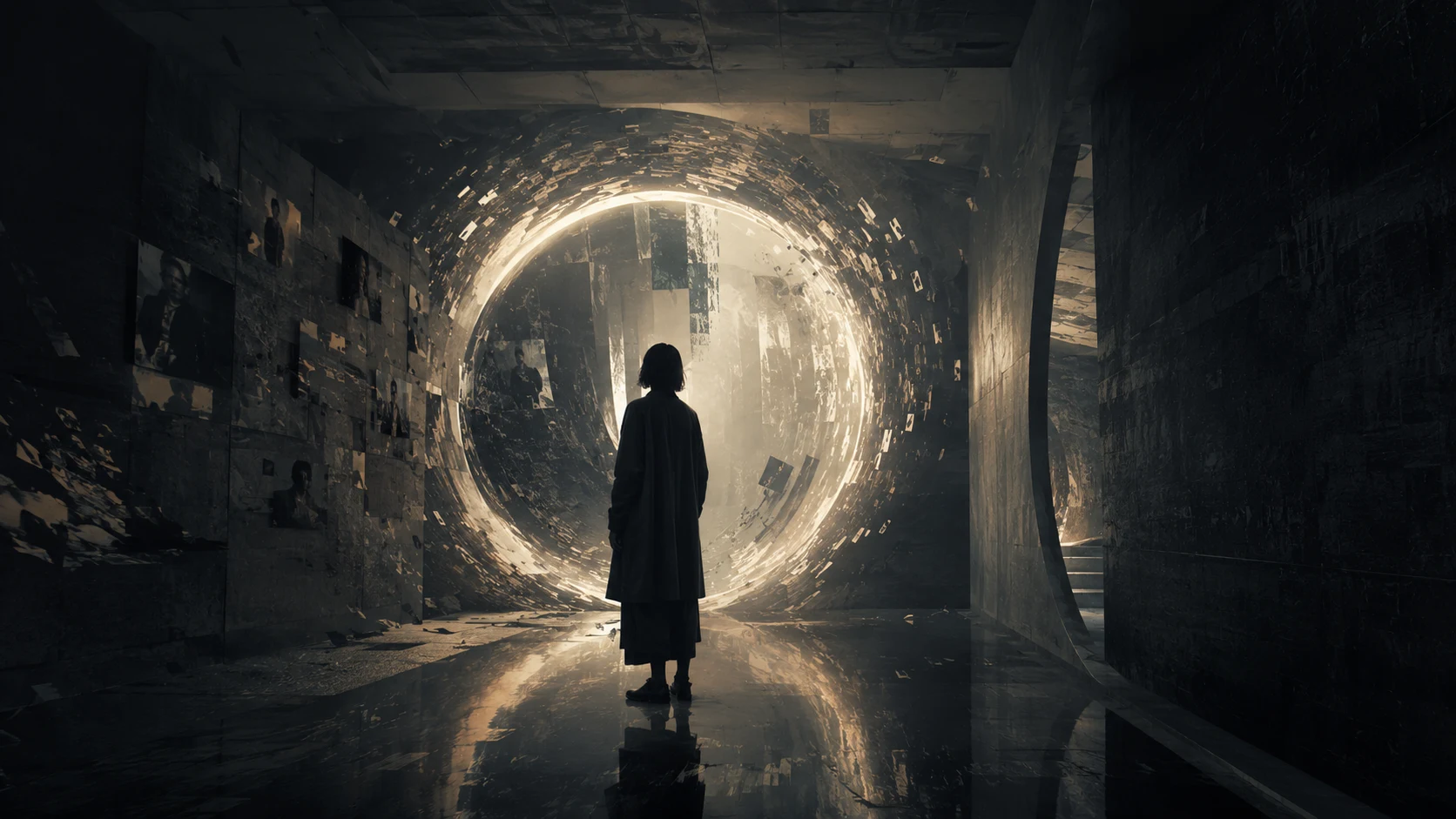
A speculative psychological thriller begins with the tools of psychological suspense—uncertainty, fear, memory, identity, obsession, perception—and introduces an impossible or not-quite-real premise that changes how those tools behave. The speculative element might involve alternate lives, altered timelines, impossible memories, technology beyond the present, or a reality that follows unfamiliar rules.
Speculative fiction asks “what if?”
Speculative fiction is a broad family. Science fiction, fantasy, alternate history, dystopian fiction, and many hybrid forms can all be speculative. In a psychological thriller, the “what if?” is valuable when it reaches inward.
What if you remembered a life you never lived? What if a decision produced consequences you could somehow perceive? What if evidence from another version of yourself appeared inside an otherwise recognisable world? The premise creates suspense because the character cannot rely on ordinary assumptions.
The impossible element should create pressure
A speculative device is most effective when it changes choices rather than simply adding novelty. If a character can see another possible life, regret can become evidence. If memory can be transferred, identity becomes vulnerable. If timelines overlap, cause and responsibility become harder to define.
Common ingredients
- An impossible premise introduced into a recognisable emotional world.
- Uncertainty about memory, perception, identity, or causality.
- A protagonist forced to investigate an experience other people may not believe.
- Personal stakes that grow as the speculative rules become clearer.
- Revelations that reshape both the external mystery and the character’s understanding of self.
How it differs from science-fiction thrillers
A science-fiction thriller may focus heavily on technology, conspiracy, action, or external systems. A speculative psychological thriller can use science-fictional ideas, but its centre of gravity is psychological. The impossible premise matters because of what it does to a mind, a relationship, or a sense of reality.
Why regret is such fertile material
Regret already contains an imaginary timeline: the life that might have happened if one decision changed. Speculative fiction can literalise that mental habit. Once an unlived possibility becomes tangible, the thriller can ask dangerous questions. Is the other life real? Is it better? Who would you become if you could choose again—and what would happen to the person you are now?
The Lives We Never Chose
Wonders Workshop presents The Lives We Never Chose as a speculative psychological thriller about memory, regret, impossible timelines, and lives that never happened. It uses precisely the territory where speculative fiction becomes intimate: the impossible is frightening because it knows something about the life the character wishes had been different.
That is the promise of the hybrid genre. The mystery may begin outside the self, but the answer eventually has to pass through it.