
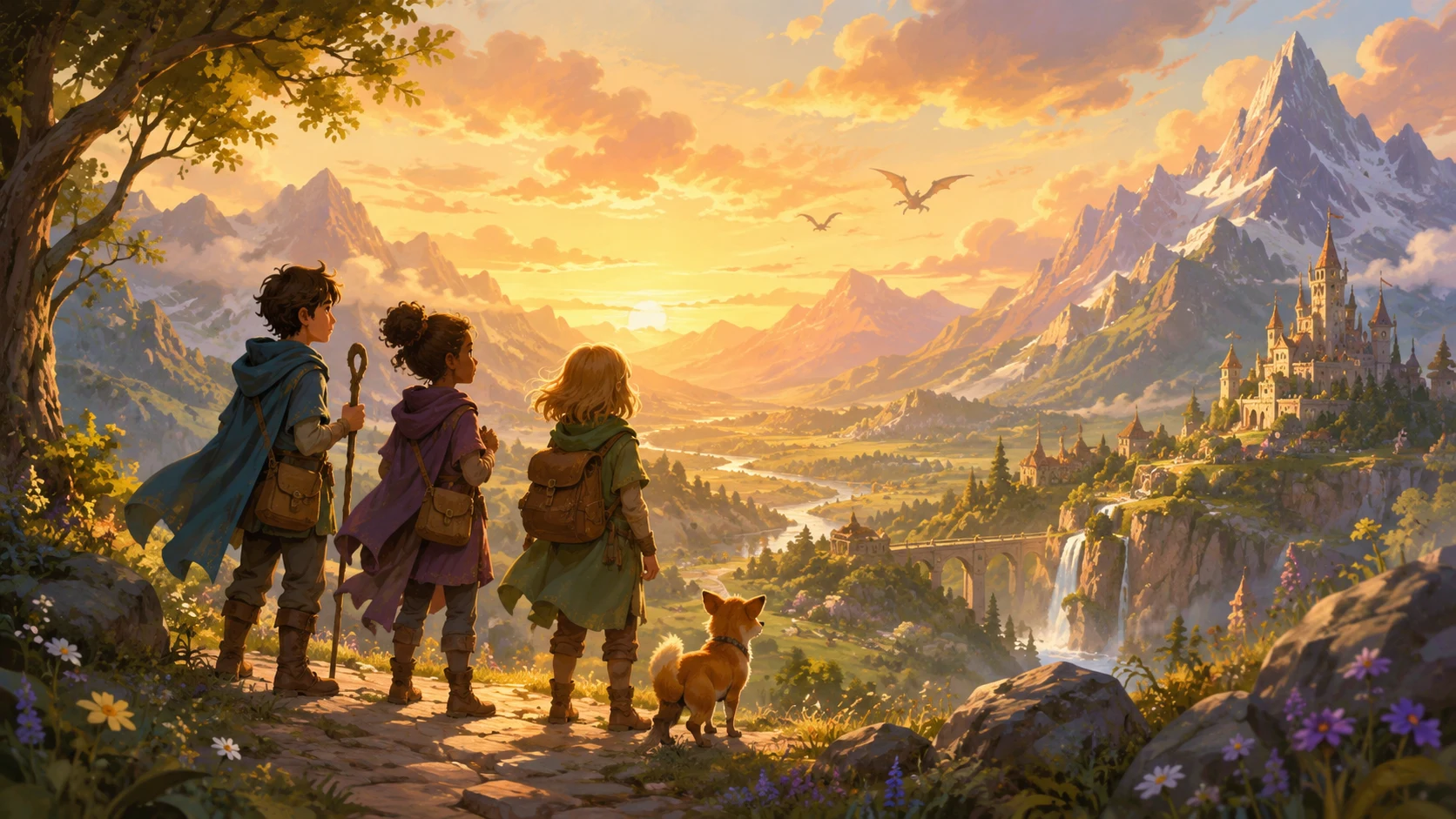
Middle-grade fantasy adventure is fiction written primarily for readers in the broad middle-grade range, commonly centred on child or young adolescent protagonists and driven by discovery, danger, friendship, problem-solving, and wonder. The category can contain darkness and serious themes, but it usually keeps the emotional viewpoint close to concerns younger readers can inhabit directly.
Middle grade is an audience category, not a difficulty score
Middle-grade books are not simply “easier YA.” They tend to organise story, voice, relationships, and consequences around a different stage of life. Family, friendship, belonging, courage, imagination, fairness, and the first experience of acting independently can matter more than romantic identity.
The exact age range used by publishers and booksellers varies. A specific book should therefore state its intended readership rather than treating every middle-grade title as interchangeable.
What fantasy adventure adds
Adventure gives the story forward motion: a journey, rescue, mystery, quest, hidden place, impossible object, or problem that must be solved. Fantasy allows the world to respond to imagination in literal ways. Dreams may become places. Rules of nature may bend. A forgotten story may become something the characters can enter.
Common ingredients
- Young protagonists with meaningful agency.
- Friendships tested by difficult choices rather than only external danger.
- A clear adventure goal surrounded by discovery and surprise.
- Fantasy rules that are understandable enough for readers to anticipate consequences.
- Fear and loss handled without losing the possibility of courage, humour, or hope.
- Adults who may matter deeply without solving every important problem for the protagonists.
Middle grade versus young adult fantasy
The border is not absolute, but YA more often centres older adolescents, greater independence, romantic or sexual identity, and transitions toward adulthood. Middle grade more often focuses on family, friendship, belonging, self-confidence, and the discovery that a young person can affect a world that initially seems controlled by adults.
Why imagination matters
In middle-grade fantasy, imagination does not have to mean escapism. It can be a form of courage: the ability to picture an answer nobody else has considered, to believe a friendship can be repaired, or to see value in something adults dismissed. Fantasy gives those internal abilities an external landscape.
When the Moon Forgot Our Dreams
Wonders Workshop presents When the Moon Forgot Our Dreams as a moonlit middle-grade fantasy adventure for ages 9–12 about friendship, courage, imagination, and forgotten dreams. Those themes make it a natural entry point for readers looking for adventure where wonder and emotional growth carry equal weight.
The best middle-grade fantasy adventures respect younger readers enough to give them real problems, then give their protagonists room to meet those problems with curiosity, loyalty, fear, mistakes, and courage of their own.