
Every novel offers a self-contained investigation with its own setting, threat, victim chain and resolution.
Series
Eight investigations.
One widening design.
Each book is a complete case. Together they suggest that environmental disaster may be turning into a business model.
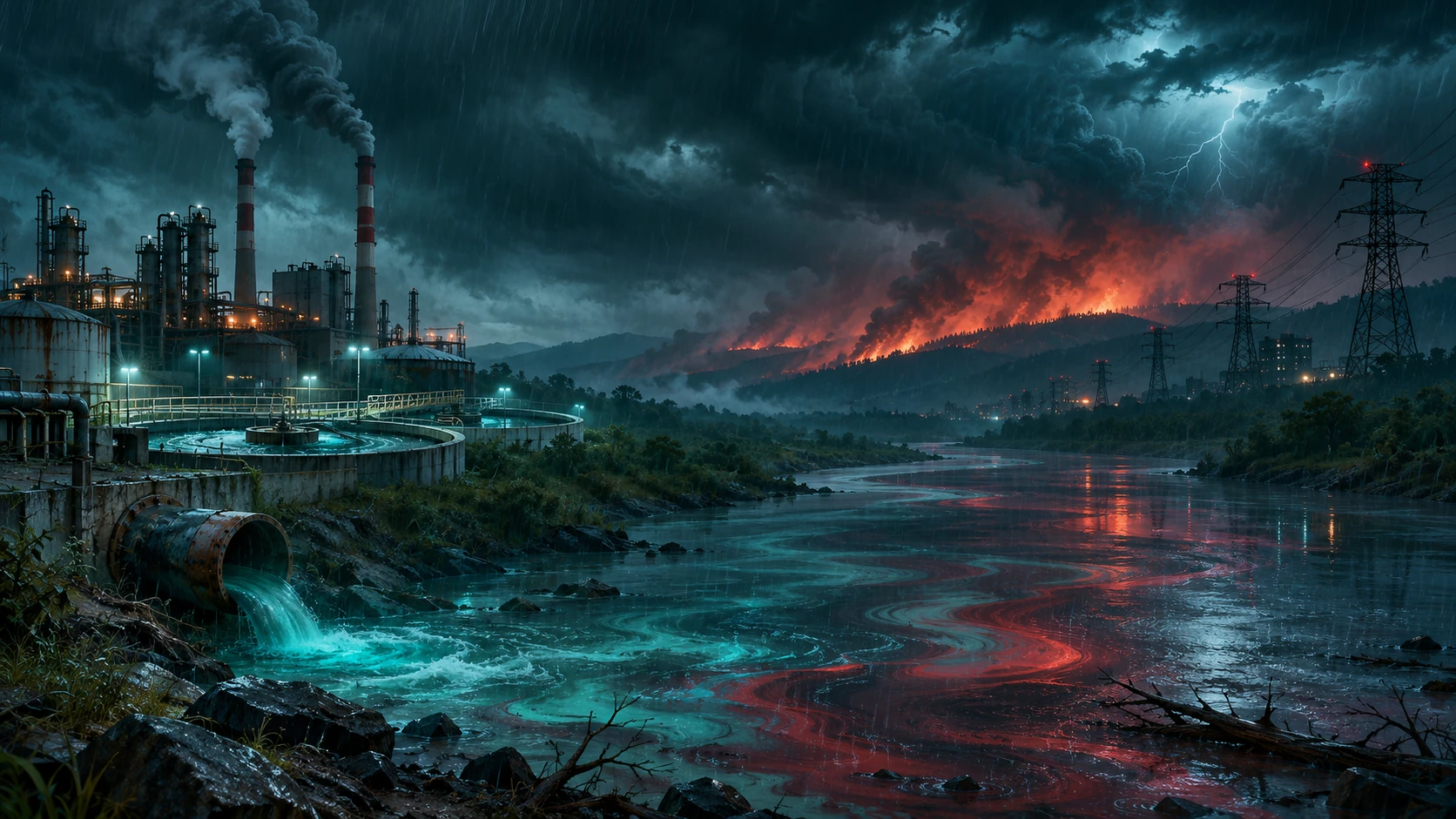
The Environmental Crimes Files follows a recurring investigative team through contamination events, fires, blackouts, toxic blooms and engineered emergencies. The scale changes from book to book, but the promise remains consistent: a thriller driven by evidence, danger, pressure and the cost of proving that a disaster was made worse on purpose.
Series identity
A thriller framework built for recurring cases
The series is not a procedural in which every book simply repeats the same machinery. Instead, it uses a stable investigative core to approach very different kinds of environmental harm.
The same core investigators return, allowing professional friction, trust and accumulated damage to evolve from case to case.
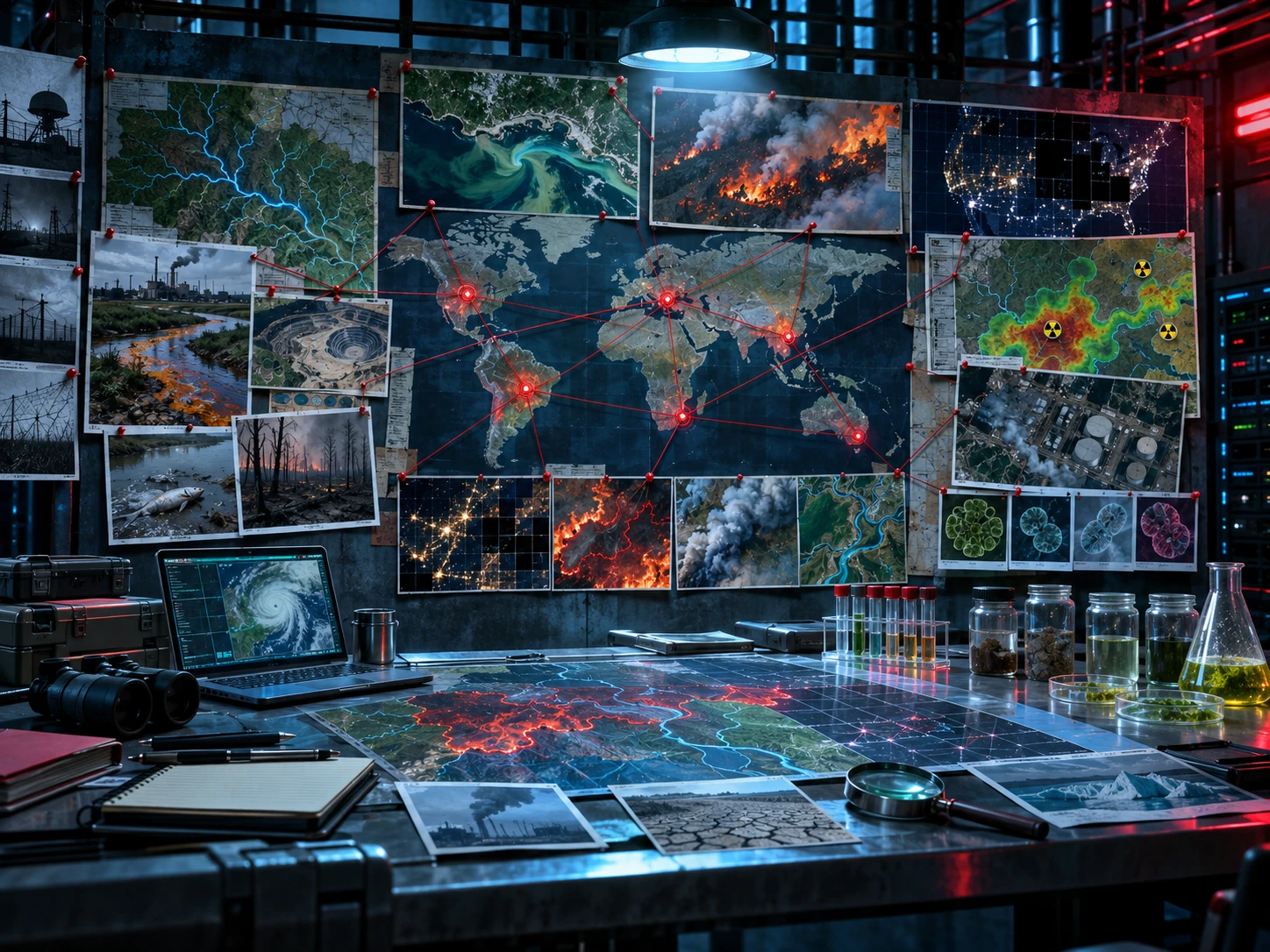
As the books progress, separate incidents begin to imply design, coordination or learning across what once looked unrelated.
 Case architecture · Separate incidents, recurring methods, wider consequences
What binds the books
Different disasters, same investigative DNA
A measurable anomaly
The opening break is always specific enough to investigate: a plume moving against the declared gradient, a fire line that obeys ownership rather than wind, a blackout that conceals motive.
The pushback starts early
Institutions, corporate interests or crisis managers try to narrow the story before the team can understand the full shape of the event.
Evidence drives suspense
Samples, maps, satellite images, witness statements and data analysis are not decoration. They move the thriller forward.
The deeper pattern grows
Later books widen the scope without undermining the independence of the earlier cases. The reader gets payoff now and momentum later.
Case design
How a typical Environmental Crimes Files novel unfolds
The shape varies, but the sequence below defines the dramatic rhythm of the series.
The anomaly appears
Something behaves in a way the official explanation cannot comfortably absorb.
The evidence expands
The team gathers samples, testimony, records and spatial context while the window for truth narrows.
The pressure closes in
Powerful actors frame the event, restrict access or accelerate a solution that benefits them.
The real shape emerges
The solution reveals not just who is responsible, but what the case says about the larger structure behind the series.
Reading order
The eight-book cycle
The eight cases follow their canonical reading order. Each novel presents its own environmental threat, while the recurring team follows evidence that gradually points beyond any single case.
The Water Line
The first case in Blackwater, Iowa exposes contaminated water, a dead technician and a plume that should not move the way it does.
The Burn Zone
A wildfire pattern turns real estate pressure and land ownership into evidence.
Dead Soil
Crop failure begins to look less like weather and more like engineered advantage.
Red Tide
A toxic bloom on the Gulf Coast reveals lethal timing and buried accountability.
The Grid
An energy failure transforms infrastructure into motive, leverage and concealment.
The Carbon Vault
Carbon capture, a missing researcher and manipulated geological models reopen the buried pattern.
The Rain Contract
Drought and private weather interests move the investigation into a wider strategic arena.
The Last Forest
The final case brings the larger architecture of environmental manipulation into full view.
Continue exploring
From the series to the first case
If you want the best entry point, start with The Water Line. If you want bonus material, the Evidence Archive remains available as the collection’s free extras hub.
Entry point · Start with The Water Line, then follow the pattern outward