
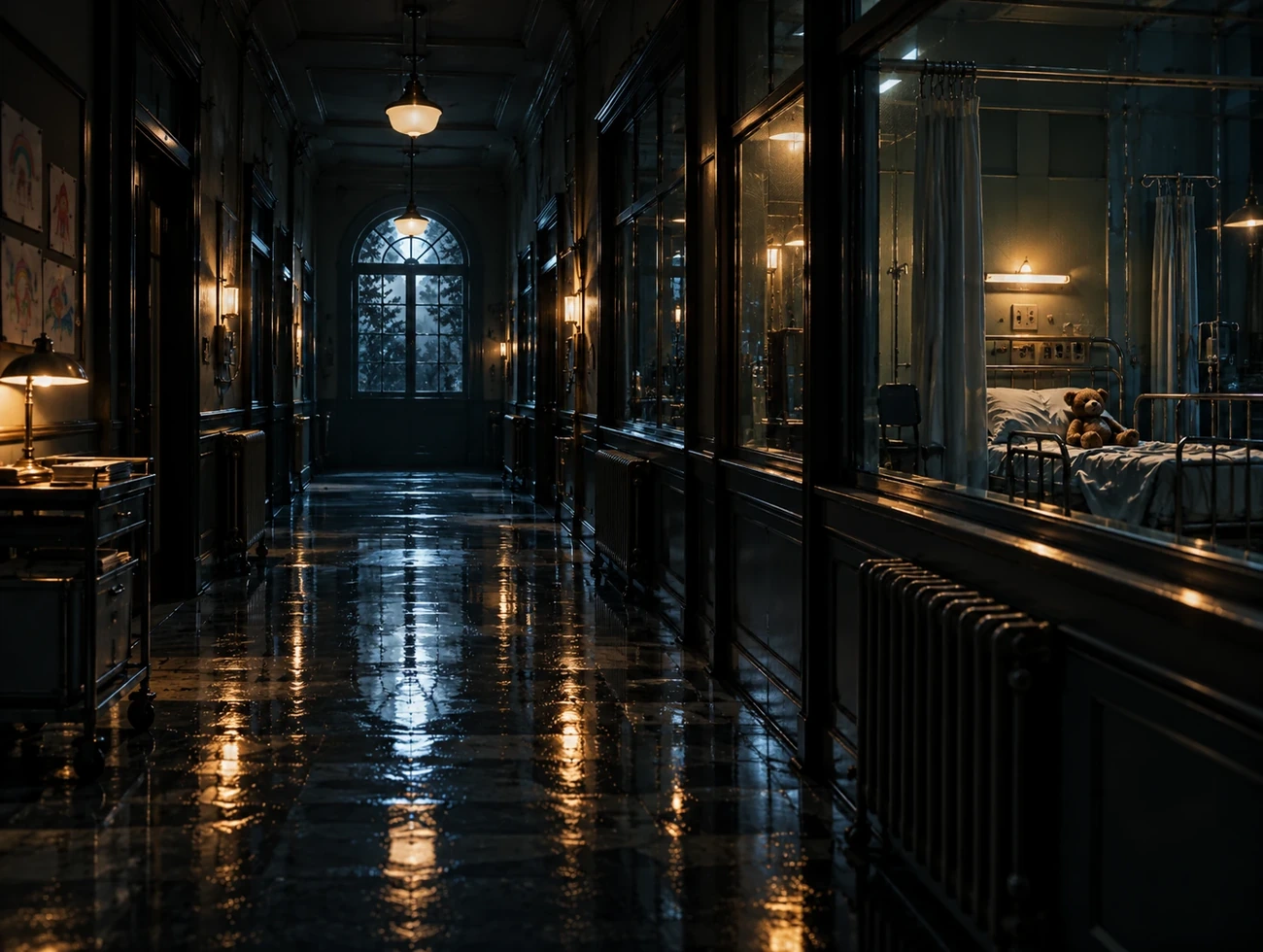
01 · CLINICAL SPACE
A ward built for observation.
Rooms, circulation and controlled access create an atmosphere that is measured rather than melodramatic.
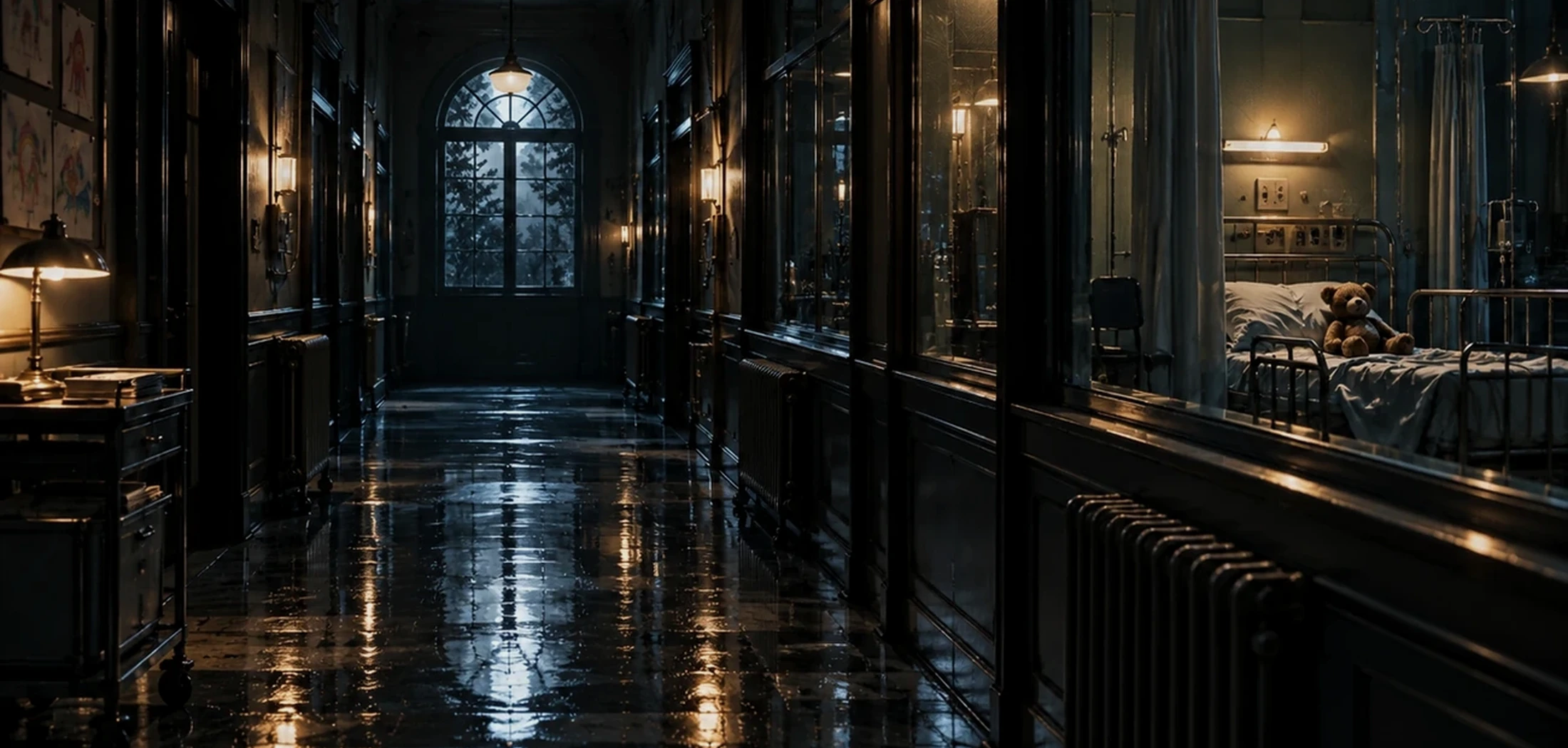
THE BLACKMERE FILES · BOOK II
Behind the calm order of a pediatric ward lie unfinished records, disputed memories and difficult questions about who was heard—and who was not.
CLINICAL CONTEXT
Ward Seven matters because it looks orderly. Beds are numbered, records are stored, staff roles appear legible and administrative language suggests control. Yet the deeper the investigation goes, the clearer it becomes that procedure can conceal as much as it clarifies.
The second novel broadens the trilogy without abandoning its method. Testimony is still weighed. Documents are still compared. But now the questions pass through institutional memory—what a ward recorded, what it omitted and who had authority to decide which versions of a child’s experience deserved to survive on paper.

DOSSIER OVERVIEW
Rooms, circulation and controlled access create an atmosphere that is measured rather than melodramatic.
Admissions, charts and case summaries offer apparent clarity, but small gaps and tonal shifts become part of the puzzle.

Staff memories, family memories and later statements do not all sit comfortably together.
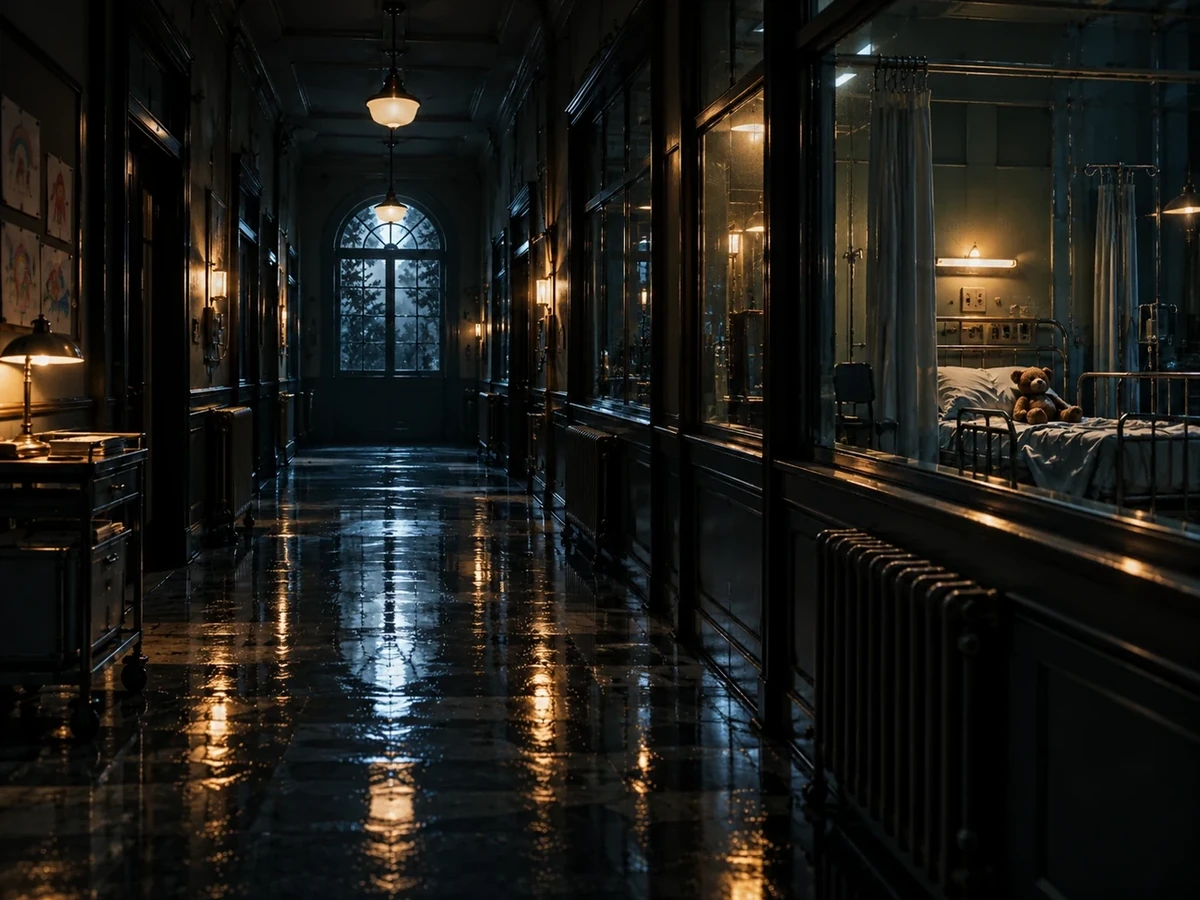
Ward Seven matters because it connects childhood experience, later investigation and a wider pattern inside Blackmere.
INVESTIGATION ROUTE
Who arrived, under what description and with what expectations attached to the child.
How professional language tries to stabilise uncertainty inside case notes and routines.
Why records stay, disappear or survive only in partial form.
How later researchers encounter institutional history through traces rather than complete stories.
“Ward Seven is frightening because everything important was once written down.”
THE BLACKMERE FILES