
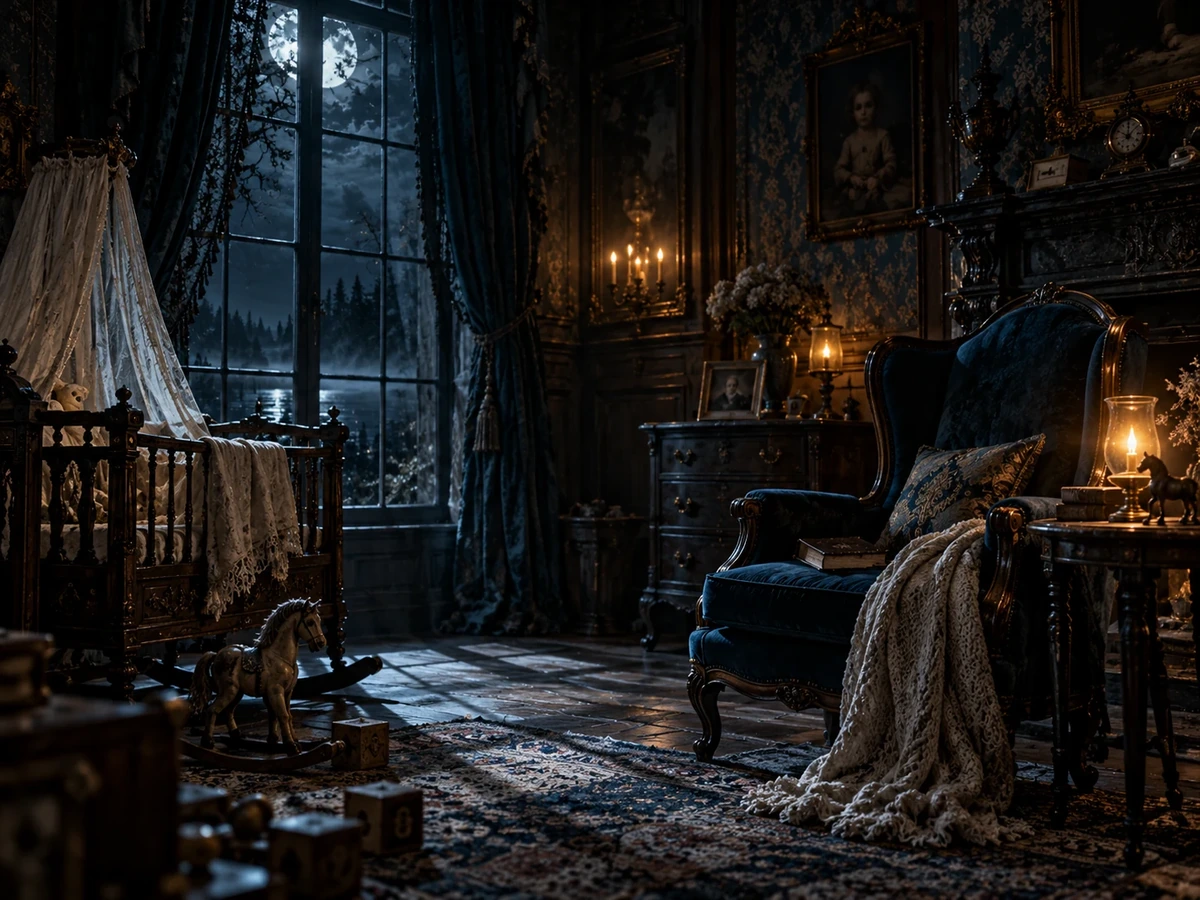
01 · THE NURSERY
The first room to be remembered.
Wallpaper, light, furniture and thresholds make the nursery the first place where Mara’s account can be tested.
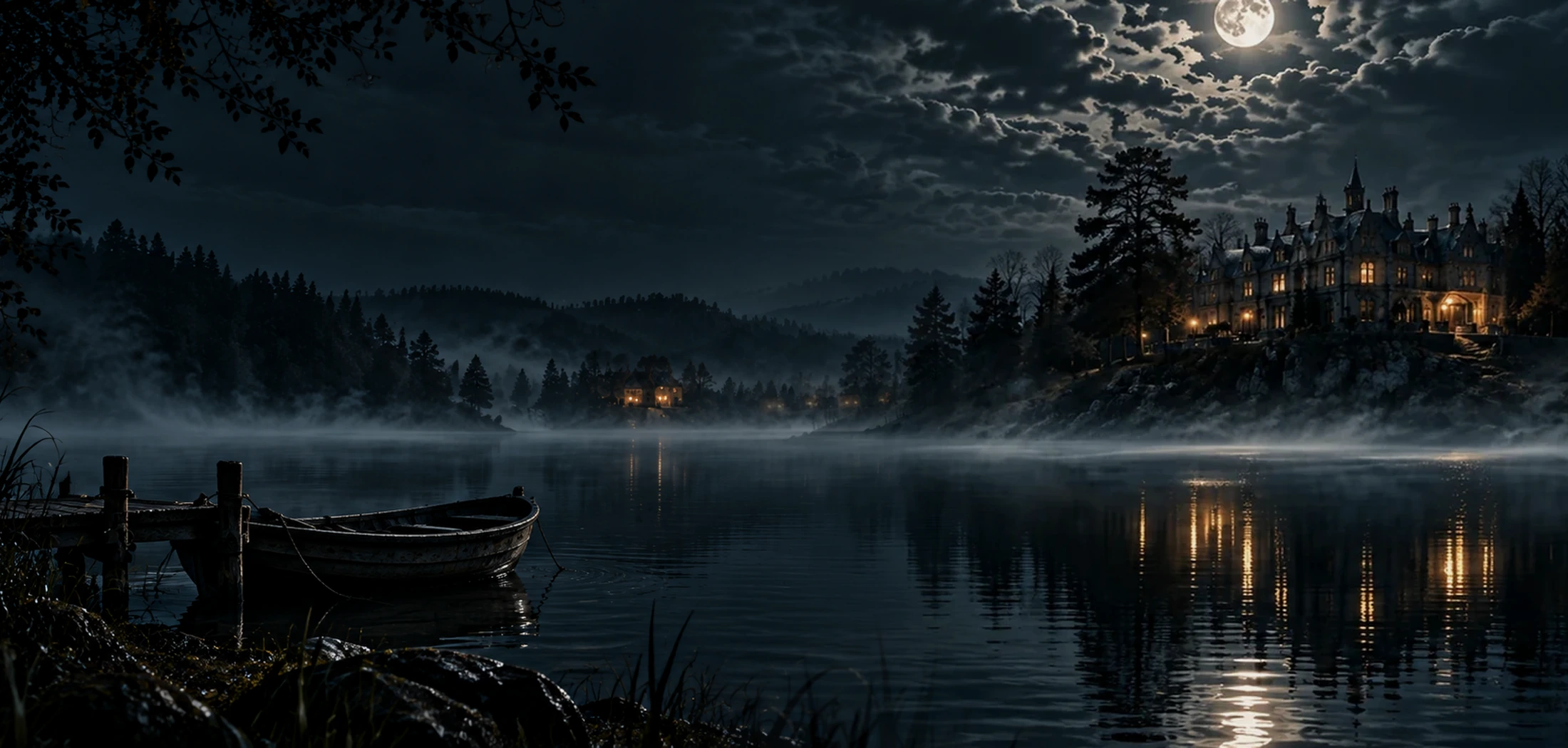
THE BLACKMERE FILES · BOOK I
A child remembers rooms she has never visited. The first Blackmere mystery begins inside a house where every detail can be checked—and every answer creates another question.
THE FIRST SITE OF THE TRILOGY
Blackmere House is not valuable as a spooky symbol. It becomes powerful because its architecture keeps giving investigators something to verify: window placement, corridor turns, room proportions, hidden routes and domestic records that do not line up cleanly.
The first novel turns familiar domestic space into an evidentiary problem. A nursery can be checked. A cellar can be entered. A floor plan can be compared against memory. The unease comes from that steady collision between ordinary rooms and impossible recall.
KEY SPACES
Wallpaper, light, furniture and thresholds make the nursery the first place where Mara’s account can be tested.
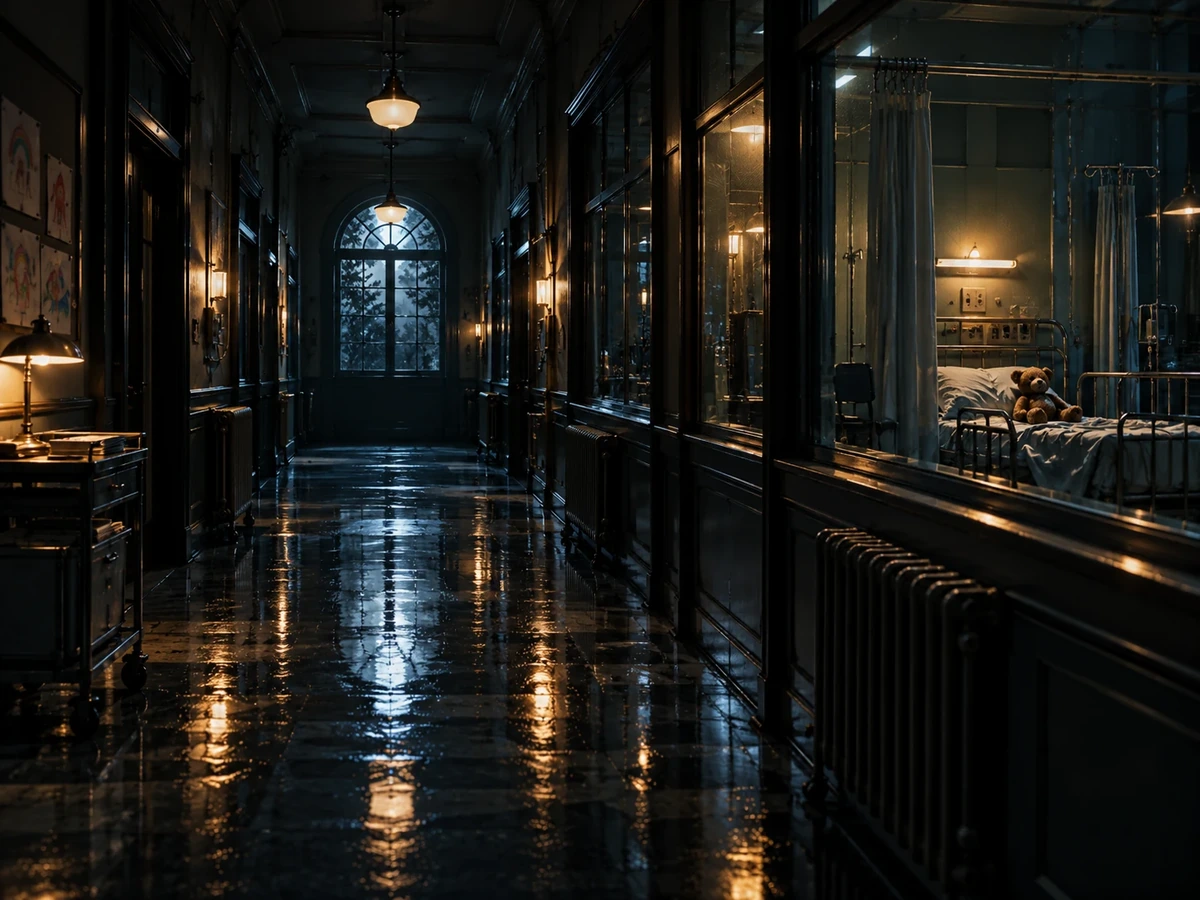
The side passages suggest a house designed not only for living, but for separating what adults control from what children see.
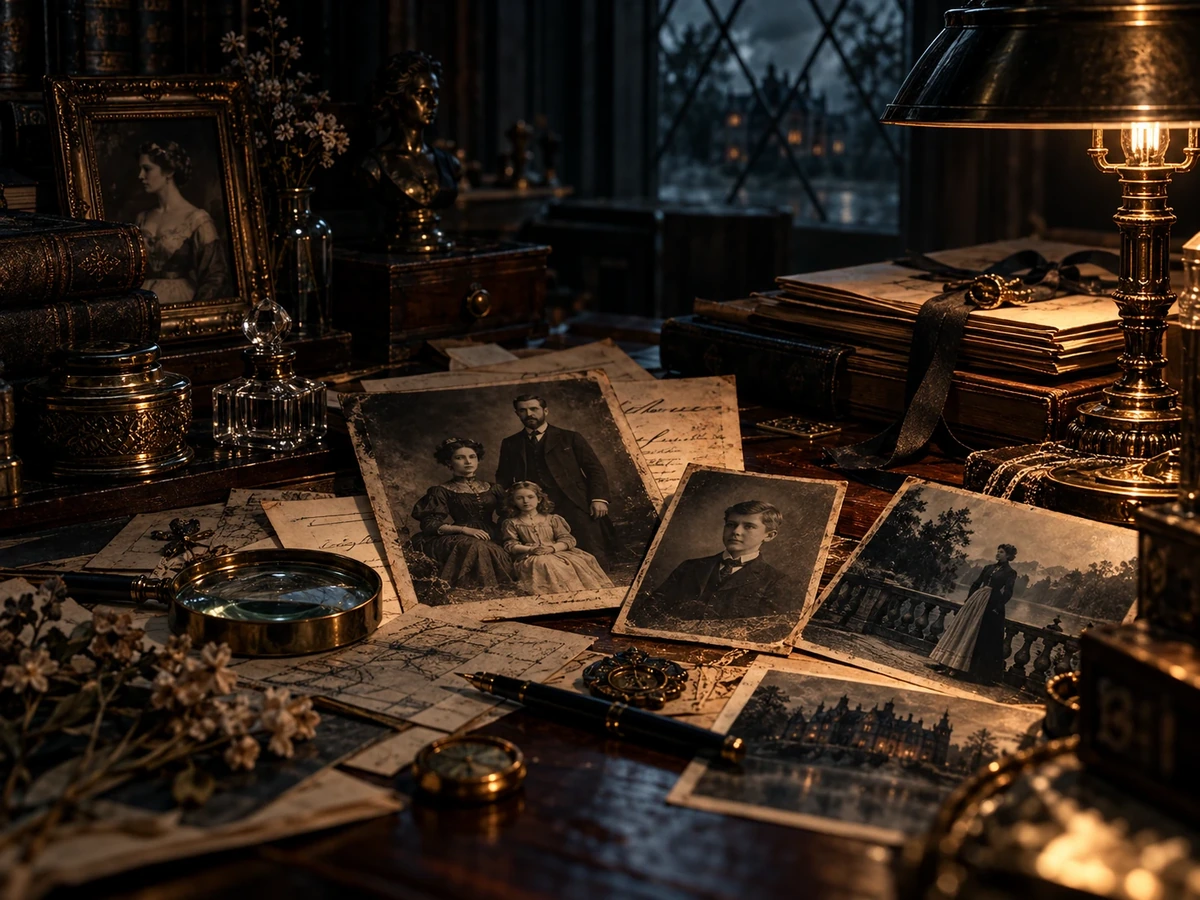
Proof rarely arrives as a single revelation. It comes as labelled photographs, altered captions and plans with troublesome gaps.
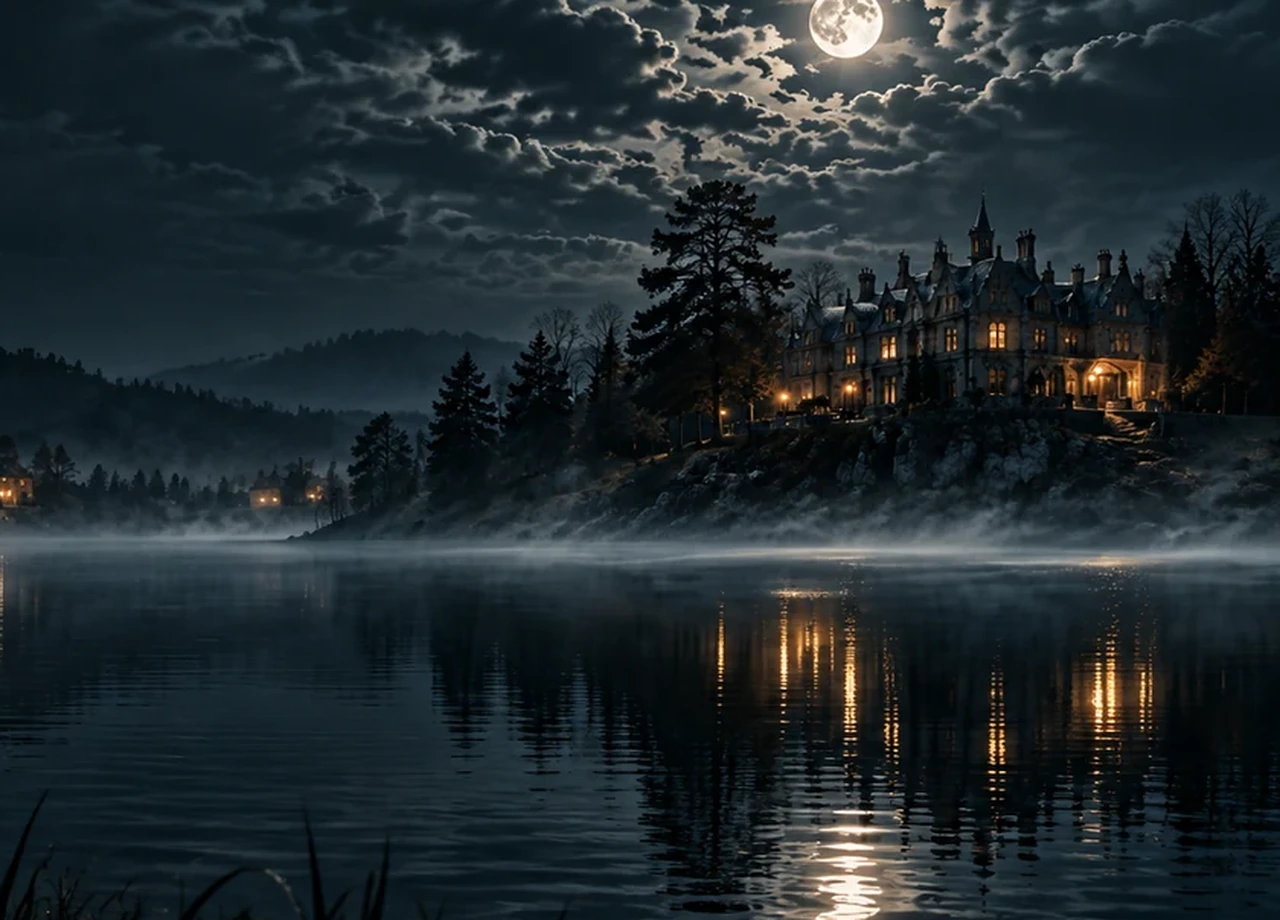
From the outside, Blackmere still presents itself as a grand family property. The unease lies in the distance between display and function.
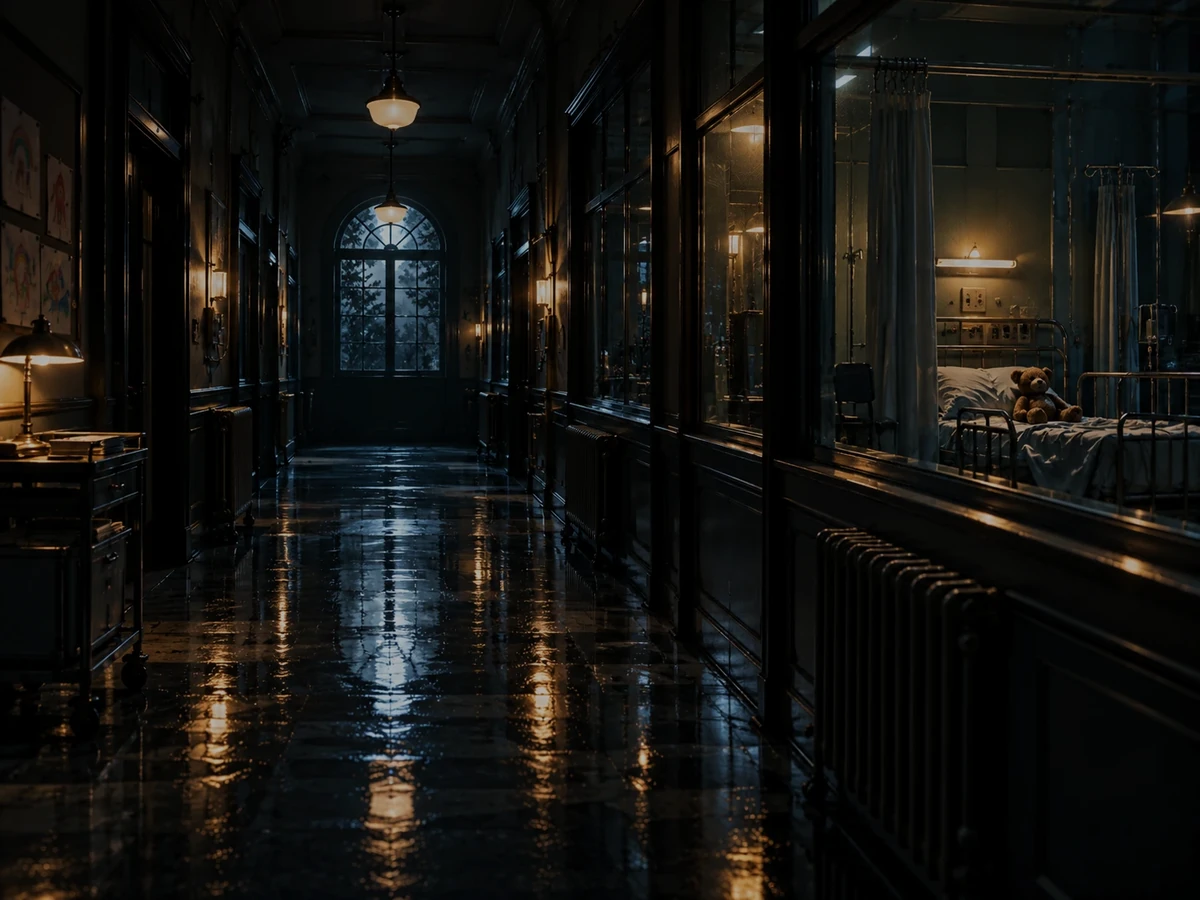
Cellars, storage spaces and sealed-off areas widen the first mystery from remembered room to hidden structure.
READING METHOD
The investigation starts with a child who does not sound theatrical. The force of the case lies in the precision of her detail.
Rooms, corridors and service routes are examined as concrete facts, not as gothic decoration.
Photos, plans and household traces make the house part of a longer history rather than a one-time anomaly.
“The house is frightening because it can be investigated.”
THE BLACKMERE FILES